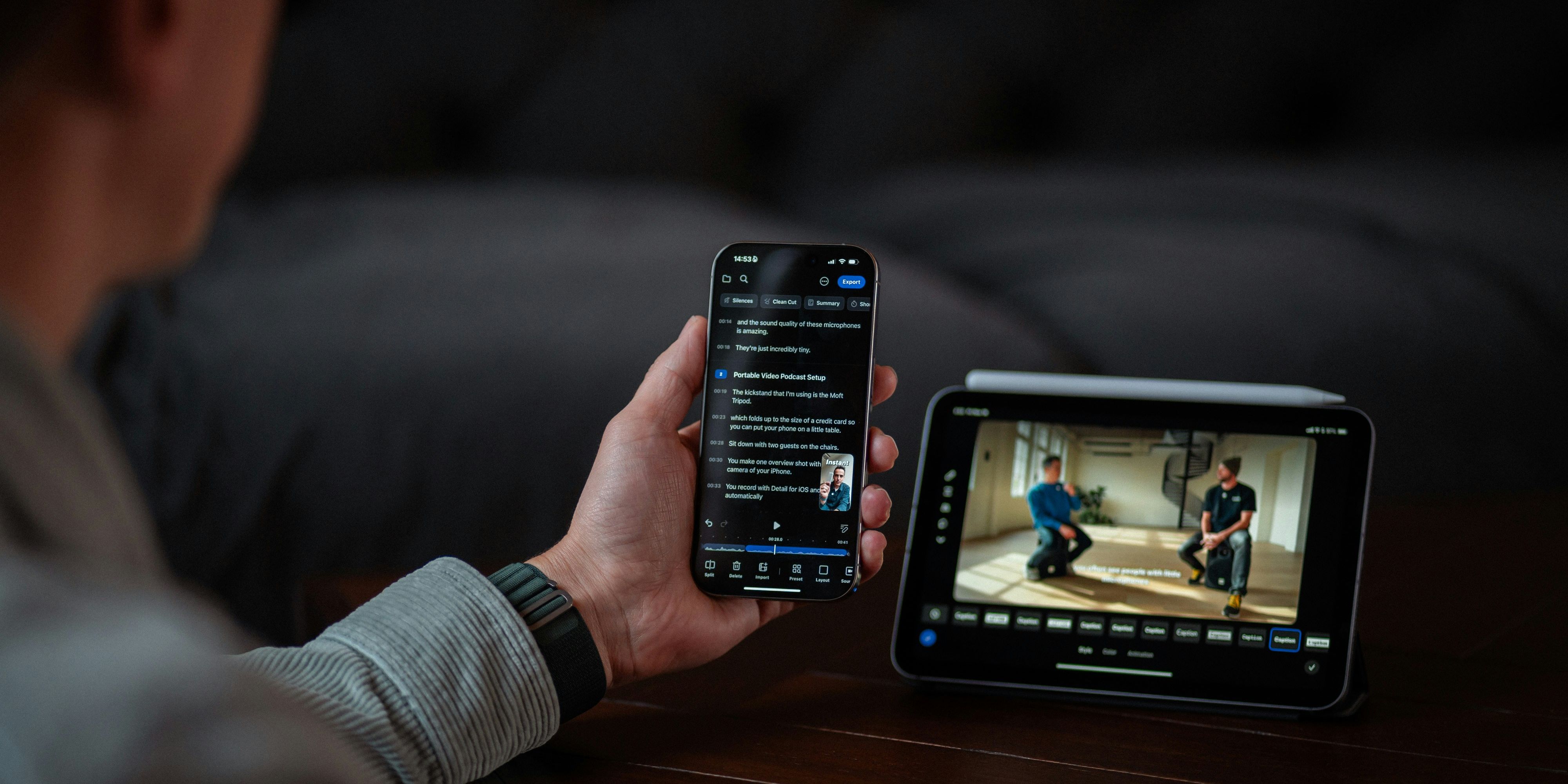
AI scribes are becoming a practical fix for one of the biggest problems in healthcare: documentation taking more time than patient care.
Many clinicians are turning to these tools because they capture visit notes, reduce after-hours charting, and keep records accurate without slowing down the appointment. If documentation is piling up, an AI scribe can make a noticeable difference in your day.
The key is choosing one that understands medical language, fits your workflow, produces notes you can trust, and meets security requirements. In this article, I'll share the best AI scribe tools that consistently meet that standard in 2026.
TL;DR
- HappyScribe: Best for accurate transcription and meeting note-taking across 140+ languages
- Twofold Health: Best for clinicians who want fast and structured EHR-ready documentation
- Sunoh.ai: Best for providers who want real-time note generation during patient encounters
- Freed: Best for clinicians who need reliable note-taking in busy or noisy environments
- ScribbleVet: Best for veterinary clinics that want fast, species-aware clinical notes
What should you look for in an AI scribe tool?
1. Reliable understanding of medical conversations
Choose a scribe that can follow real patient encounters, not just clean audio. It should recognize clinical terms, abbreviations, and the way clinicians naturally speak. If it mishears often, you end up fixing its work instead of saving time.
2. Flexibility outside clinical settings
Many clinicians also run administrative meetings, training sessions, or research interviews. A strong scribe should handle those conversations smoothly, not just exam-room dialogue.
3. Notes that reduce your editing time
A good tool produces visit summaries that already look close to what you’d chart on your own. When the structure matches your workflow, you spend far less time rewriting or reorganizing the output.
4. Strong privacy standards
Patient encounters carry sensitive information, so the scribe must be clear about GDPR compliance, HIPAA alignment, encryption, and data storage. You shouldn’t have to dig to understand how your notes are handled.
5. Easy movement into your EHR
Check how quickly you can get the generated note into your system. Some scribes copy well into major electronic health record systems (EHRs), and others offer direct connections. A smooth handoff keeps your pace steady through the day.
6. Quick turnaround during busy clinics
Notes should be ready soon after the visit. Delays throw off the rest of your schedule and put you back into after-hours charting.
💡Did you know?
Medical scribes were first introduced in the 1970s. The role emerged because physicians were overwhelmed with documentation, particularly in emergency departments, leading to the rise of modern medical scribes.
Best AI scribe tools: At a glance
| Feature | HappyScribe | Twofold Health | Sunoh.ai | Freed | ScribbleVet |
|---|---|---|---|---|---|
| Best for | Accurate transcription and meeting-note taking; versatile across clinics, research, admin, multilingual meetings | Clinicians who want fast, structured, EHR-ready medical notes with minimal setup | Providers who need real-time note generation during live patient encounters | Clinicians working in busy/noisy environments who need reliable note-taking support | Veterinary clinics that need species-aware clinical notes |
| Key features | AI + optional human-proofed transcription; speaker detection and meeting-note export; Style Guide and formatting control | Auto-generated clinical notes from audio or summaries; works on desktop and mobile; template-based, customizable notes | Ambient voice capture + real-time transcription; generates SOAP summaries; multi-specialty support; EHR integration | AI-powered clinical note generation with human support; adaptable templates; multi-language support | Captures animal-specific context; one-click transfer to PIMS; supports multi-user teams |
| Languages supported | 140+ | 50+ | 5+ | 15+ | Not specified |
| Privacy / Compliance | Encryption, SOC 2 Type 2, GDPR compliance; access control and SSO available | GDPR and HIPAA-compliant | GDPR and HIPAA-compliant | GDPR and HIPAA-compliant | SOC 2 Type 2 Certified |
| Pricing |
Free plan available Basic: $17/month Pro: $29/month Business: $89/month Enterprise: Custom pricing |
Free Personal: $69/month Group: Custom pricing |
Starts at $149/month per user | Starts from $90/month per clinician |
Essential: $40/month Unleashed: Depends on usage |
1. HappyScribe
Best for: Accurate transcription and meeting note-taking across 140+ languages
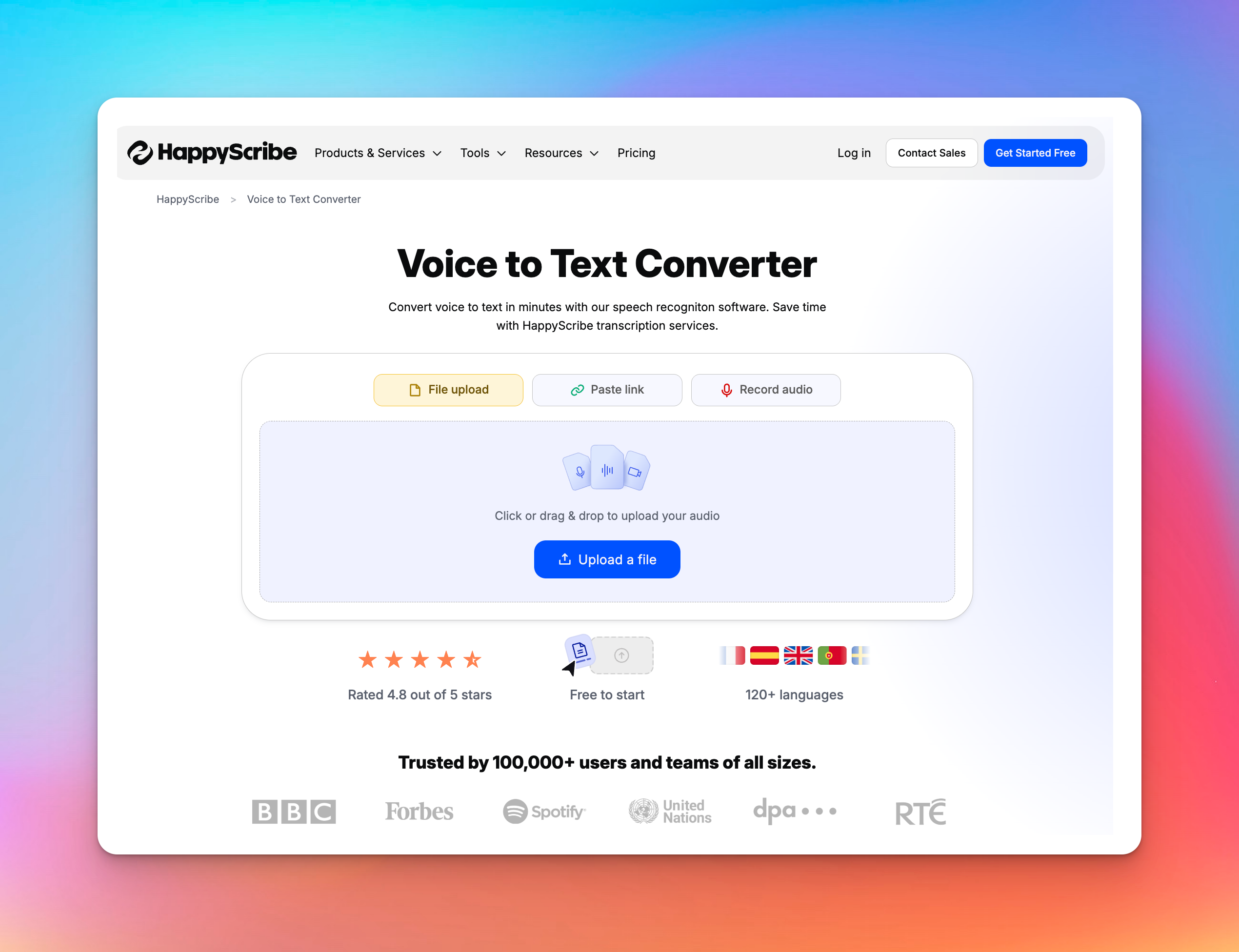
You probably know HappyScribe as a dependable speech-to-text transcription platform. What often surprises people is how well it performs as an AI scribe for health professionals too.
Clinics use it for patient notes, researchers rely on it for interviews, and teams across industries plug it into everyday meetings without changing their workflow. HappyScribe adapts easily, which is why it sits at the top of this list.
HappyScribe’s key features
1. High-precision transcription for complex recordings
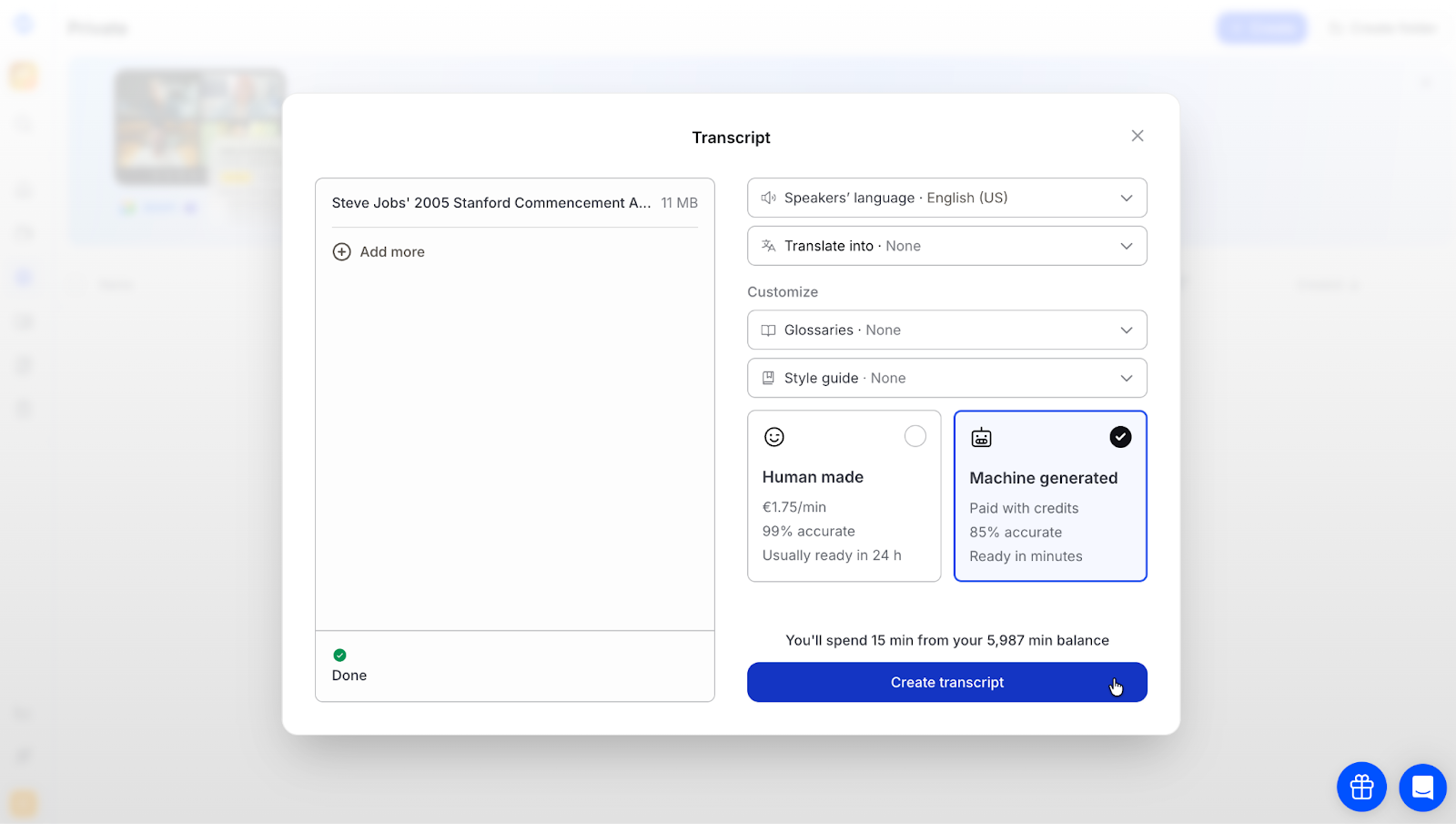
HappyScribe’s advanced speech recognition engine performs well in varied recording conditions, picking up fast speakers, overlapping voices, and technical terminology.
When files need to be spotless, the human proofreading option pushes accuracy to 99% for publication-ready transcripts and medical notes.
2. AI notetaker for recording telecommunication calls

HappyScribe’s AI notetaker can capture online calls and discussions directly and give you a clean transcript without manual setup.
It works well for telehealth sessions, meetings, research interviews, or any remote conversation that needs accurate documentation.
3. Wide language coverage
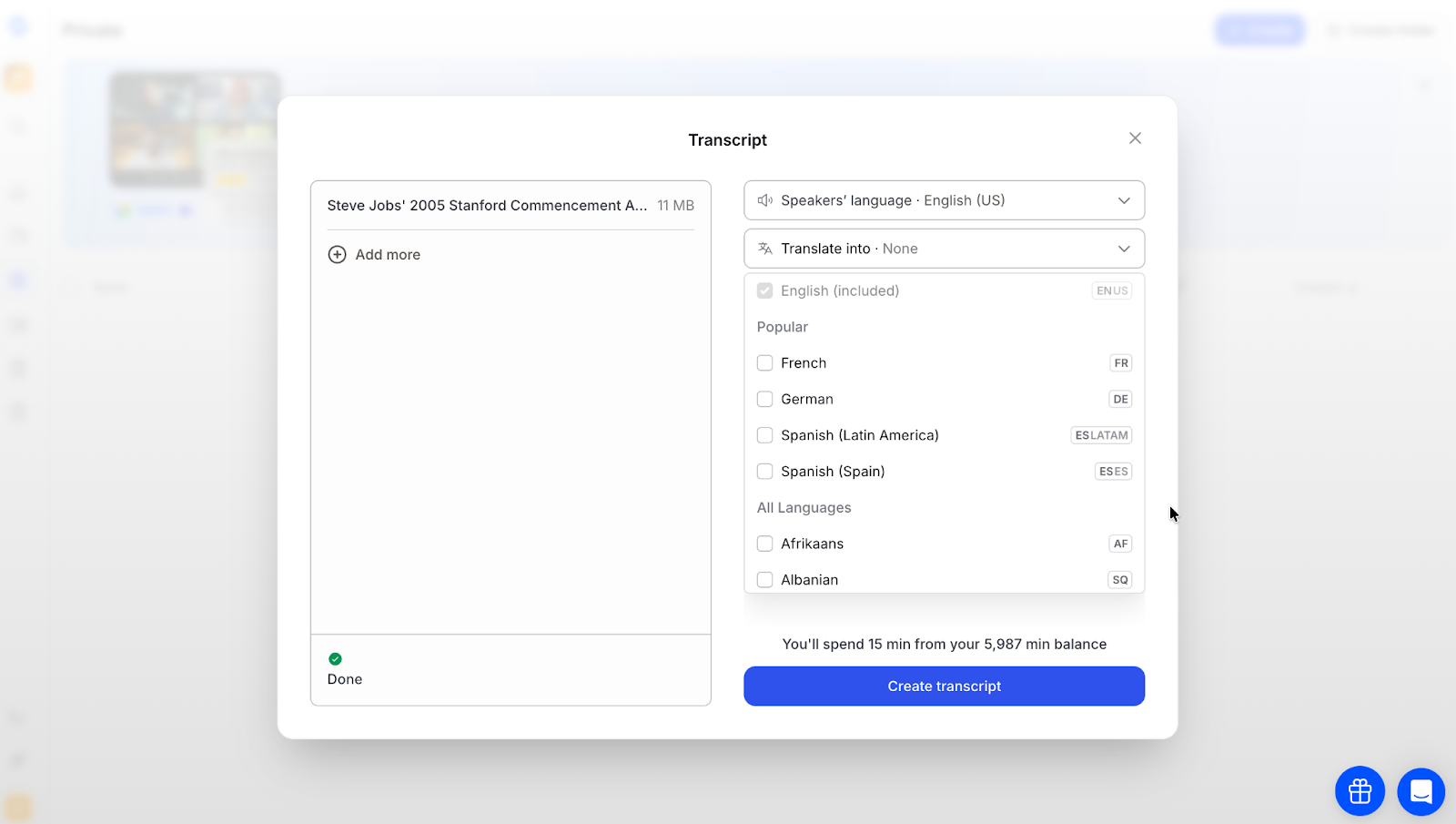
You get broad language and accent coverage with more than 140 languages supported in AI mode, ranging from global standards to niche linguistic groups.
The Human-made service adds support for over 130 languages and works well when recordings involve complex accents or specialized vocabulary.
4. Customizable outputs with Style Guides
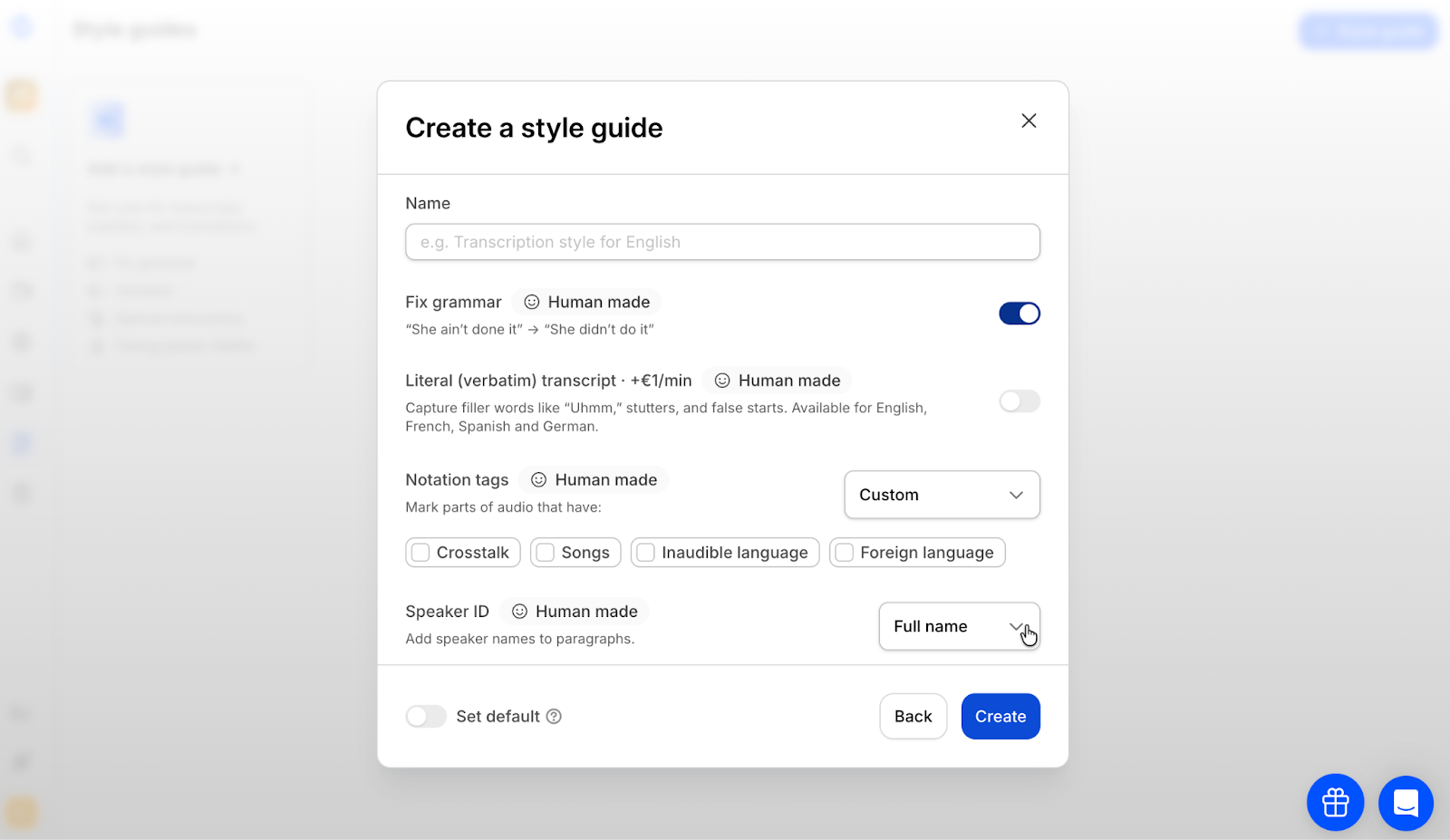
HappyScribe’s Style Guide gives you full control over transcript output. You can define preferred terms, specify formatting, request verbatim capture, or enforce punctuation rules so every transcript follows the same standard.
Thanks to this feature, you can maintain consistency across patient notes and recurring documentation.
5. Built-in compliance and security
HappyScribe is built with strict security controls that support GDPR alignment and SOC 2 Type 2 certification. SSO adds an extra layer of account protection, making it suitable for professionals handling sensitive information.
6. Flexible import and export formats
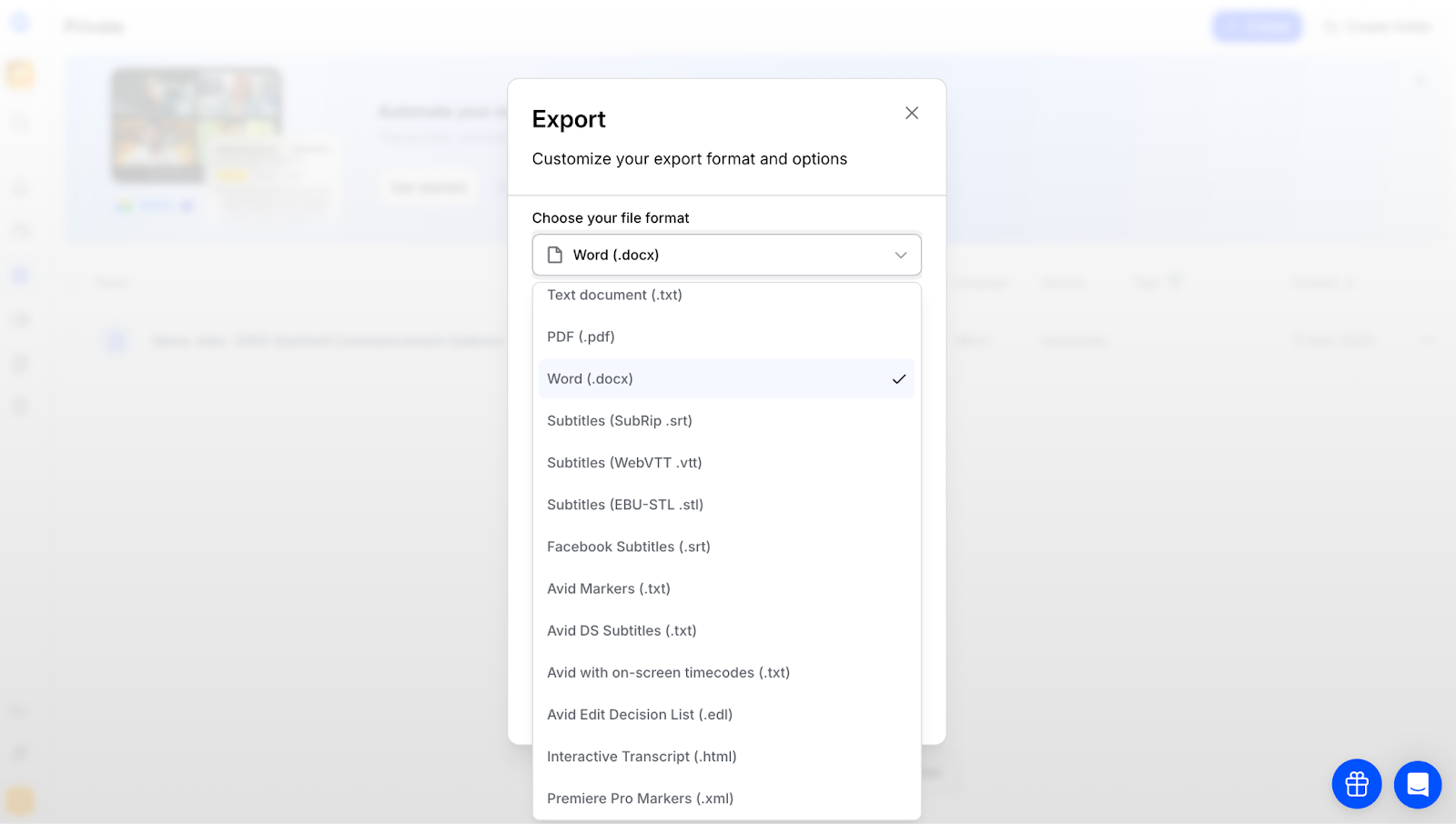
HappyScribe’s file flexibility is one of its biggest strengths. You can upload almost any audio or video format, be it MP3, MP4, WAV, WMV, AVI, MOV, or something else.
Export formats include DOCX, TXT, SRT, MP4, and more, which helps you move transcripts straight into EHR systems, LMS platforms, or internal documentation workflows.
HappyScribe’s pricing
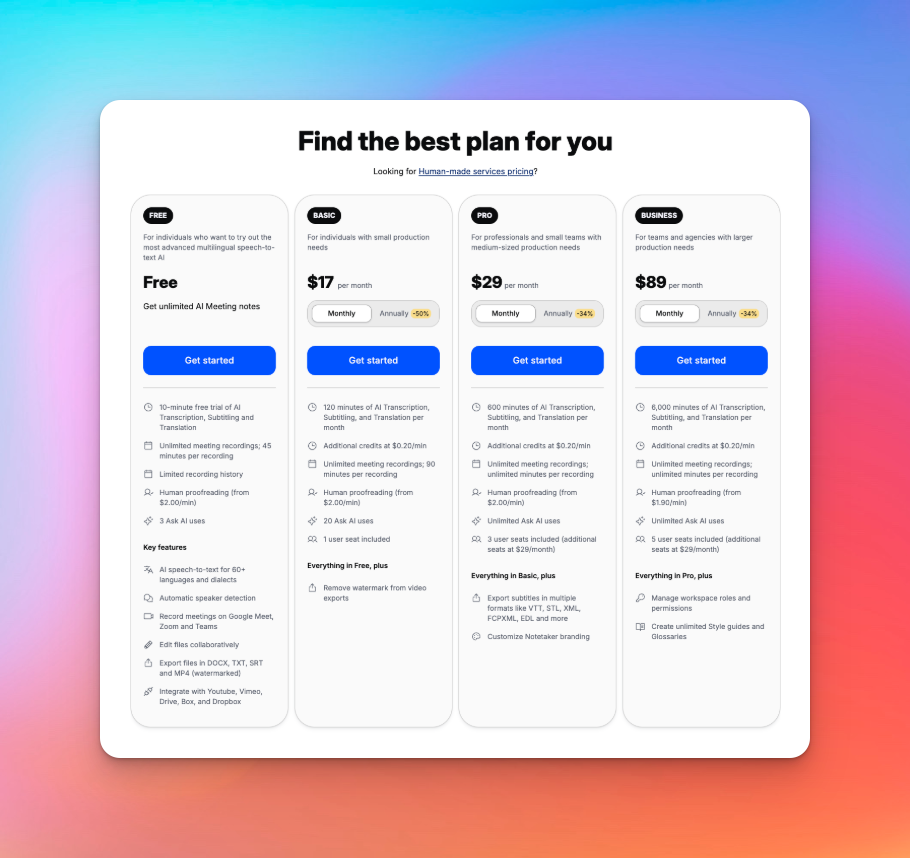
- Free: Unlimited meeting recordings (60 min/recording), 10-min trial for transcription/subtitling/translation when you upload the file
- Basic: $17/month
- Pro: $29/month
- Business: $89/month
- Enterprise: Contact sales to get tailored solutions directly
Pros
- Up to 99% accurate transcripts, in 140+ languages
- Rich, interactive editor with access control
- GDPR and SOC 2 Type II compliant for security
- Offers API support
- Easy-to-use interface
Cons
- Doesn’t have a mobile app yet
- The platform is GDPR-compliant, but not HIPAA-compliant
What are real-life users saying about HappyScribe?
Wonderful service, I enjoy using HappyScribe immensely; the result is exactly what I needed.
Very fast and accurate tool! Always working, fast, many customisation possibilities. Web app is also convenient and easy to use.
2. Twofold Health
Best for: Clinicians who want fast and structured EHR-ready documentation
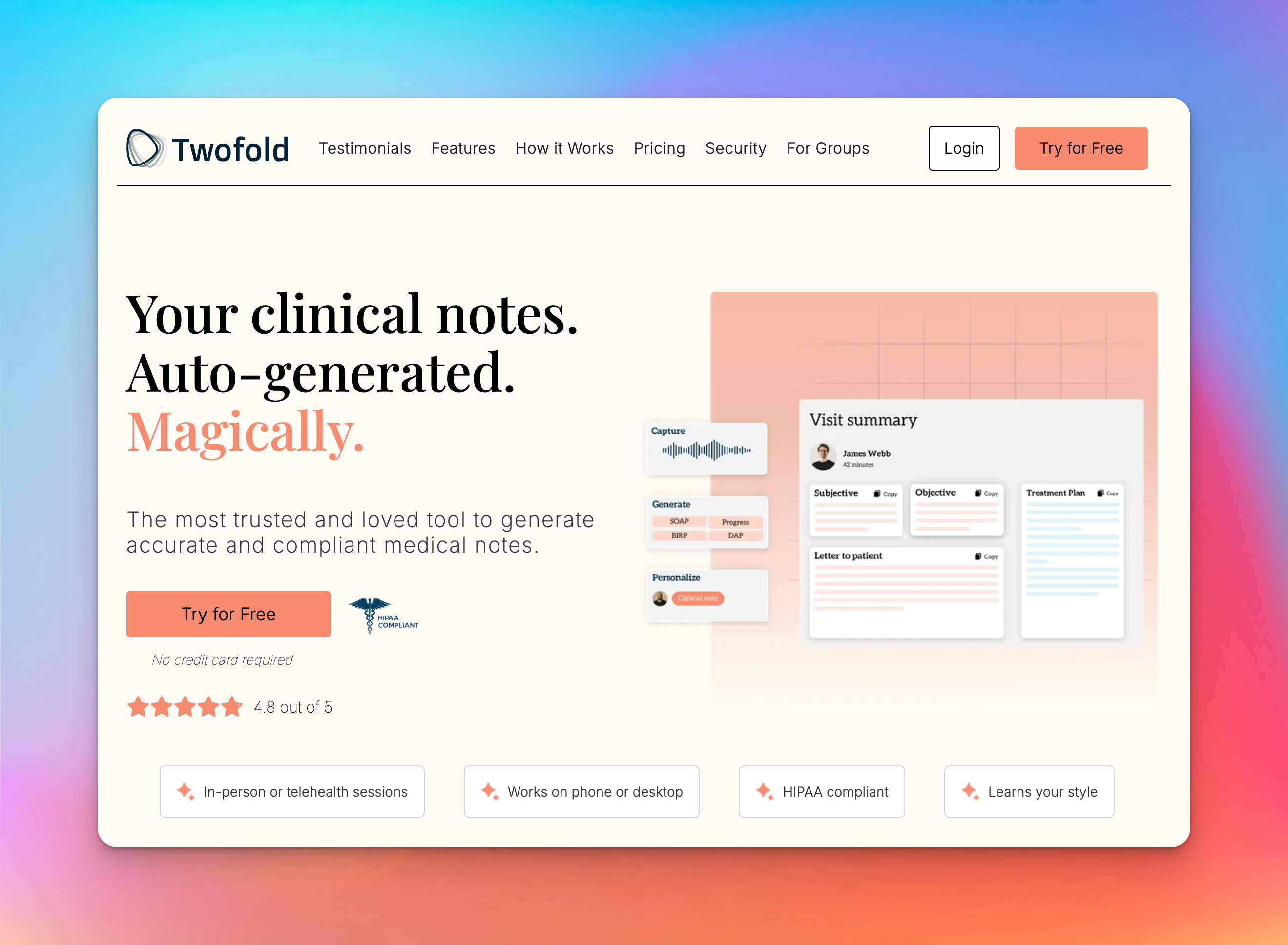
Twofold Health takes the pressure off clinical charting by turning session audio or written summaries into neatly structured notes.
It’s built specifically for healthcare workflows, so the output aligns with how clinicians actually document cases.
Many practitioners use it to reclaim hours every week and reduce after-hours charting.
Twofold Health’s key features
- Generates full SOAP/progress notes in under a minute
- Works across specialties: general medicine, psychiatry, behavioral health, primary care, therapy, and physical therapy
- Supports multiple input modes: direct audio capture of sessions, uploading summaries, or manual summaries
- Customizable templates let you tailor notes to your preferred structure and writing style
- Ensures HIPAA/HITECH compliance and data privacy
Twofold Health’s pricing
- Free
- Personal: $69/month
- Group: Custom pricing
Pros
- Requires minimal setup; accessible for small clinics or solo practitioners who don’t have time for complex implementation
- Since it accepts live audio, summaries, or uploads, it adapts to different practice styles
- Works on desktop and mobile
Cons
- If templates don’t match a specialty’s documentation style, or if the case is complicated, Twofold’s output may require substantial reworking
- May miss or misrepresent important clinical decisions, forcing extra review and correction before finalizing notes
3. Sunoh.ai
Best for: Providers who want real-time note generation during patient encounters.
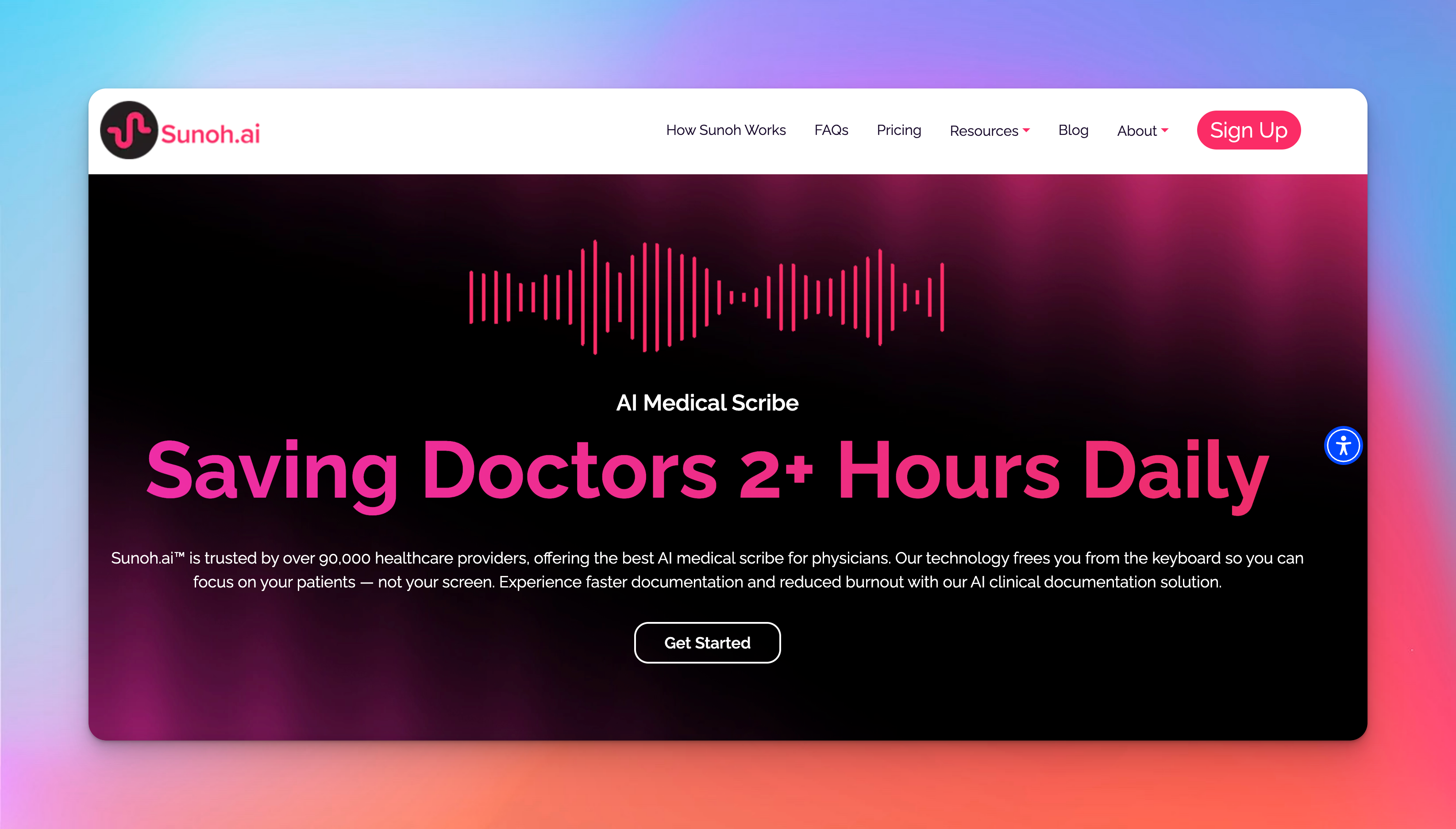
Sunoh.ai captures the full patient-clinician conversation and produces structured medical notes automatically.
It works live during sessions or after you upload recordings, giving clinicians an uninterrupted way to document care while staying engaged with the patient.
Sunoh.ai’s key features
- Supports multiple medical specialties, from cardiology and pediatrics to dentistry, behavioral health, and more
- Produces draft progress notes or SOAP notes automatically based on conversation transcripts
- Speaker-aware transcription: captures and distinguishes multiple speakers; useful in family-care or pediatric-care contexts
- Seamless integration with EHR systems, enabling auto-export of notes into patient records
Sunoh.ai’s pricing
- Starts at $149/month per user
Pros
- Supports multiple languages and works across devices (desktop or mobile)
- Handles different accents and multiple speakers in a patient visit with reasonable reliability
- Integrates with leading EHRs
Cons
- Cost adds up over time for smaller clinics or low-volume practices
- As with any AI tool, accuracy isn’t perfect
4. Freed
Best for: Clinicians who need reliable note-taking in busy or noisy environments
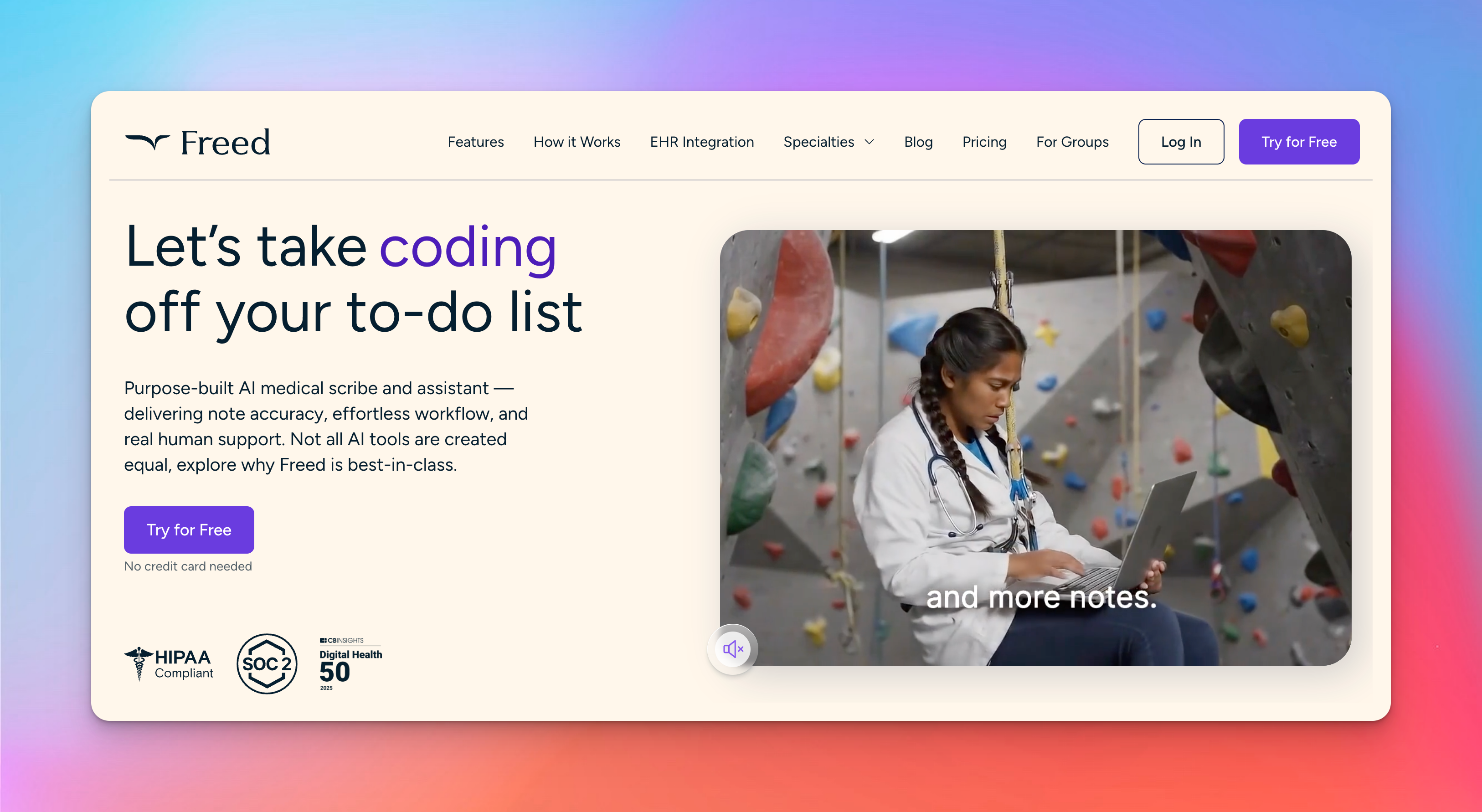
Freed is built for medical professionals who want accurate notes even when clinical conditions aren’t ideal.
It focuses on producing clean, structured documentation that doesn’t require extensive corrections afterward, while meeting core privacy requirements.
Freed’s key features
- Effective even in noisy environments; useful for busy clinics or hospitals where background noise is common
- Offers human support along with automation
- Designed to generate clean, clinically formatted notes quickly
- HIPAA-compliant
Freed’s pricing
- Starts from $90/month per clinician
Pros
- Simple and quick to set up
- Offers customizable templates; you can adapt the note format and structure to suit different visit types or specialties
- Supports 14+ languages
Cons
- For specialized practices, Freed may struggle to capture nuance
- If voices overlap or there is background noise, transcription quality degrades
5. ScribbleVet
Best for: Veterinary clinics that want fast, species-aware clinical notes
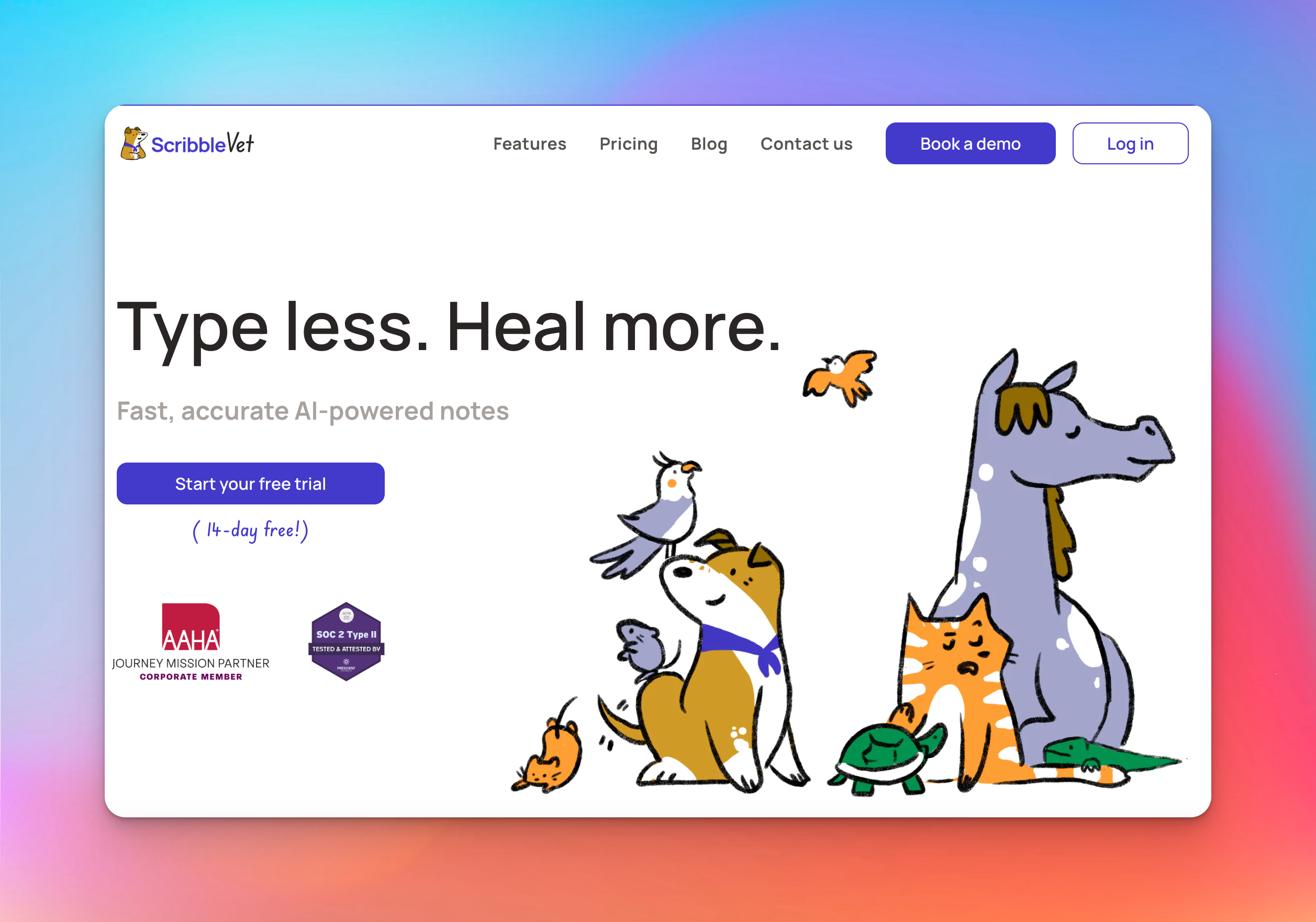
ScribbleVet brings AI scribing into the veterinary world with workflows built specifically for animal care.
Instead of adapting human-medicine templates, it produces notes that reflect how vets actually examine, diagnose, and document cases.
Whether you’re handling routine checkups, dental exams, or post-op updates, the tool turns recorded appointments into structured veterinary notes.
ScribbleVet’s key features
- Generates structured SOAP notes from audio dictation or recordings
- Integrated with an AI-powered decision-support tool called LifeLearn Sofie
- Supports generation of specialized outputs such as dental charts for canine or feline dental exams; useful for veterinary dentistry workflows
- Notes can be exported as PDFs or emailed directly to clients/colleagues
ScribbleVet’s pricing
- Essential: $40/month
- Unleashed: Depends on usage
Pros
- Output is more relevant than general-medicine scribes repurposed for vet clinics
- Lets you quickly transfer your SOAP notes to your PIMS with a single click
- Brings your entire team on board, from technicians to front-desk staff, with no extra fees
Cons
- Pricing may weigh heavily for smaller or lower-volume clinics
- Manual review may still be necessary
Start with the AI scribe that lightens your workload
Choosing the right AI scribe can reshape how your day feels. When notes are ready on time, documentation stops bleeding into your evenings and patient interactions stay uninterrupted.
Each tool here solves a slightly different problem, but they share one goal: giving clinicians room to focus on care rather than catching up on charts.
If you want a scribe that works across clinical, administrative, and research workflows without adding friction, HappyScribe is the most versatile starting point. It handles complex audio, supports more than 140 languages, adapts to your documentation style, and fits neatly into mixed-use environments where you’re not just capturing patient visits but meetings, interviews, and internal training as well.
Before committing to a specialty scribe, try running a few real recordings through HappyScribe. You’ll quickly see whether its accuracy and flexibility lighten your workload enough to make it your primary tool for 2026.
Frequently Asked Questions
What is an AI scribe?
An AI scribe is a tool that listens to patient recordings or clinical conversations and turns them into structured documentation you can use in your EHR. It supports clinical documentation by capturing medical terms, summarizing encounters, and reducing manual charting. Many clinicians also use transcription-first tools like HappyScribe for patient meetings and medical training sessions.
Is an AI scribe free?
Full AI medical scribe platforms usually require a paid plan because they handle sensitive data and generate structured medical summaries. Some tools like HappyScribe offer limited free tiers for testing, which are useful for clinicians experimenting with patient recordings before choosing a full scribe workflow.
What is the best AI scribe?
The best AI scribe depends on the type of care you provide and the level of structure you need. Tools like Twofold Health or Sunoh.ai are built specifically for SOAP or progress-note generation. HappyScribe stands out when you need strong transcription accuracy across multiple specialties or languages, especially in practices that handle both clinical and non-clinical documentation. The right choice is the one that cuts your editing time the most.
How many doctors use AI scribes?
Adoption is rising quickly as clinicians try to reduce after-hours charting and improve documentation quality. Thousands of providers now use AI scribes in some form. Many begin with transcription tools such as HappyScribe to handle patient recordings and everyday notes, then move to more specialized scribing workflows if their specialty requires structured templates.
Are AI scribe tools accurate and reliable for professional use?
Most modern AI scribes deliver reliable accuracy for routine clinical documentation, especially when they’re designed for medical terminology and structured note formats. Transcription-driven platforms like HappyScribe perform well even with fast speakers, background noise, or accents, which helps maintain clarity before you convert transcripts into formal chart notes. Human review is still part of the workflow, but the baseline output is solid enough for professional use.

Rodoshi Das
Rodoshi is the Content Lead at HappyScribe, the privacy-first transcription and AI notetaker platform based in Barcelona. Shaping content strategies and building AI workflows excites her as much as exploring new SaaS tools. She specializes in product-led content that informs rather than sells, grounded in honest product benchmarking and low tolerance for empty marketing speak.