Transcription in qualitative research is the process of converting recorded audio or video data into written text for systematic analysis.
It sits between data collection and data analysis, and the decisions researchers make about transcription style and method directly shape how data is coded and reported.
This guide covers where transcription fits in the research process, how to match your transcription approach to your analytical method, the step-by-step workflow from protocol design to secure storage, and how to report your transcription decisions in your methodology section.
Where transcription fits in the qualitative research process
Transcription works as the bridge between data collection and data analysis. But the decisions that shape it should happen much earlier.
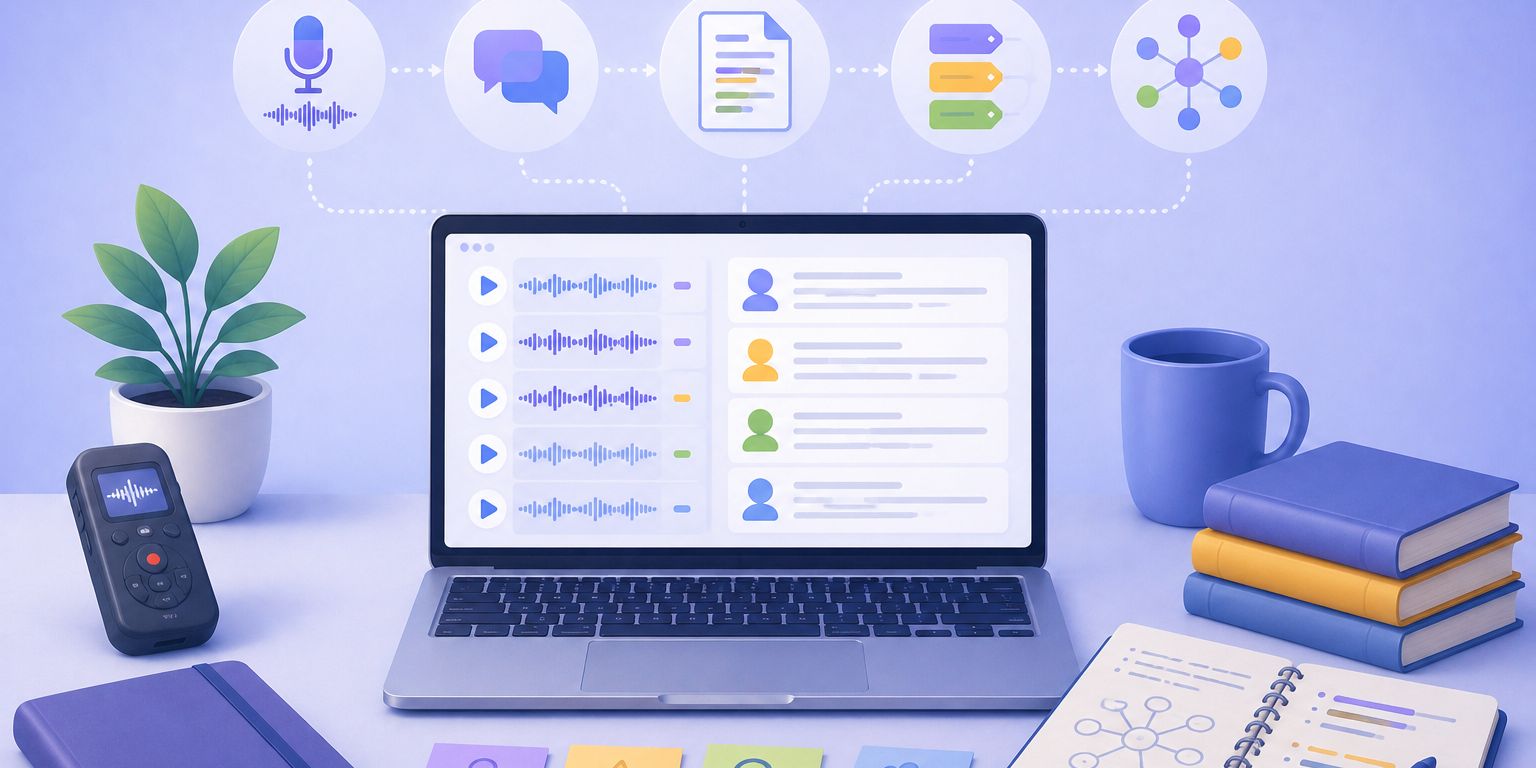
Here is how transcription connects to the broader research process:
1. Research design
This is where transcription decisions belong. When you define your research questions, choose your methodology (thematic analysis, grounded theory, conversation analysis, and so on), and develop your data collection plan.
You should also decide which transcription style to use, who will do the transcription, and how you will handle challenges like overlapping speech or inaudible segments. Your ethics application or IRB protocol should explicitly address transcription.
2. Data collection
Recording quality directly affects transcription quality. A clear recording with minimal background noise, well-positioned microphones, and speakers who do not talk over each other will produce a far more accurate transcript, whether you are transcribing manually or using AI.
3. Transcription
This stage may appear purely administrative, but it is better understood as the first layer of data engagement. Researchers who transcribe their own data often report that the process surfaces early analytical insights, because you are forced to listen closely and repeatedly to every word.
4. Data management and coding
Transcripts are imported into qualitative data analysis software (NVivo, ATLAS.ti, MAXQDA, Dedoose) for coding and thematic tagging.
The transcription style you chose at the design stage directly affects coding efficiency. Clean verbatim transcripts are easier to scan and code thematically. Full verbatim transcripts preserve more data but take longer to work through.
5. Analysis and interpretation
Patterns, themes, and theoretical insights are drawn from the coded data. Transcripts serve as the evidentiary base for your findings.
6. Reporting and writing
Direct quotations from transcripts appear in your published work. The transcription style determines whether those quotes include filler words, pauses, and speech patterns or present a polished version of what was said.
Quick note: Newer qualitative data analysis software allows coding directly from audio or video files, potentially reducing the need for full written transcription.
There can be workflows where researchers listen to recordings, code non-verbal cues, take thematic notes, and then transcribe only the specific quotes they plan to use.
The approach can save significant time, but it trades the immersion benefit of full transcription for speed.
How to match the transcription style to your analytical method
The right transcription style depends on what you are trying to learn from your data. A thematic analysis looking for patterns across 30 interviews has different transcription needs than a conversation analysis examining the micro-dynamics of a single clinical interaction.
The table below maps common qualitative methodologies to the transcription approach that best serves them:
| Analytical method | Recommended transcription style | Rationale |
|---|---|---|
| Thematic analysis | Clean verbatim | Focus is on content and meaning; filler words add noise to coding |
| Grounded theory | Clean verbatim | Iterative coding benefits from scannable, readable text |
| Interpretive phenomenological analysis (IPA) | Full or clean verbatim | Depends on whether lived-experience language patterns matter to your analysis |
| Discourse analysis | Full verbatim | How something is said carries as much analytical weight as what is said |
| Conversation analysis | Jeffersonian notation | Turn-taking, overlap, micro-pauses, and intonation are the primary data |
| Narrative analysis | Full or clean verbatim | Story structure and sequencing are important; filler words usually don’t matter |
| Content analysis | Clean verbatim or edited | Focus is on theme frequency and prevalence, not speech patterns |
The alignment maps onto Oliver et al.'s distinction between naturalized and denaturalized transcription:
- Naturalized transcription preserves speech as delivered, including all disfluencies, pauses, and non-standard grammar
- Denaturalized transcription polishes the text for readability, foregrounding what was said over how it was said
The choice reflects your epistemological position: does meaning reside in the delivery of speech, or in its content?
For researchers whose methodology sits at the boundary (for instance, phenomenology), the safest approach is to transcribe at a higher level of detail than you think you need.
You can always strip filler words from a full verbatim transcript during analysis. But you cannot add them back to a clean verbatim transcript later.
The transcription process: Step by step guide
Whether you are a doctoral researcher preparing for your first round of interviews or a research lead managing a multi-site study, the transcription process follows a consistent structure.
1. Write a transcription protocol during research design
Document your decisions before data collection begins. Your protocol should specify:
- Which transcription style you will use, and why it fits your methodology
- How you will label speakers (e.g., "Interviewer," "P1," "P2")
- How you will represent non-verbal cues (e.g., [laughs], [pause: 3 seconds], [sighs])
- How you will handle inaudible or unclear segments (e.g., [inaudible 00:12:34])
- Your anonymization procedure: which identifying details will be replaced, and with what (pseudonyms, codes, generic descriptors)
If your study involves multiple transcribers, be it team members, hired professionals, or an AI tool, this protocol ensures consistency across the dataset.
2. Capture high-quality audio
A transcript can only be as accurate as the recording behind it. Use a dedicated audio recorder rather than a laptop microphone. Test levels before the interview begins, and minimize background noise.
In focus groups, position the recorder centrally, and ask participants to avoid speaking at the same time.
For remote interviews conducted over Zoom, Teams, or Google Meet, use the platform's built-in recording function and ask participants to use headphones to reduce echo.
3. Choose your transcription method
You have three options, but each come with trade-offs:
- Manual transcription: The researcher listens to the recording and types out the text. Time-intensive (full verbatim takes roughly 6 to 8 hours per hour of audio; clean verbatim takes 3 to 5 hours), but offers deep immersion in the data
- AI-assisted transcription: Upload the recording to a speech recognition tool, receive a draft transcript in minutes, then review and correct against the audio. It’s been the dominant approach in academic research since the last few years, and it reduces total transcription time compared to manual transcription
- Outsourced human transcription: A professional transcription service produces the transcript. You get high accuracy, but the researcher loses the immersion benefit of doing it themselves. Important for large-scale studies or when the researcher's language does not match the interview language
4. Review and verify
Regardless of your transcription method, always check the transcript against the source audio.
For AI-generated transcripts, this review step is where you catch misheard words, correct speaker attribution errors, and fill in segments the AI marked as unclear.
For outsourced transcripts, spot-check at least 10 to 15% of the total audio against the written text.
This is not optional for rigorous qualitative research. A transcript that has not been verified against the recording is a draft, not a data source.
5. Anonymize and format
Replace identifying information, names, locations, organizations, job titles, during transcription itself rather than as a post-hoc find-and-replace. Post-hoc anonymization is prone to missed references.
Also, apply consistent formatting: speaker labels, timestamps at regular intervals or at key moments, and any non-verbal notation specified in your protocol.
6. Store securely
Follow your institution's data protection requirements. Many universities have specific rules about cloud storage.
Don’t forget to encrypt files and use password protection. Store consent forms separately from transcripts to prevent re-identification.
Ethical considerations in research transcription
Transcription raises ethical questions that go beyond the technical process.
a. Informed consent for recording and transcription
Participants should understand not only that they are being recorded, but how that recording will be handled afterward.
- Will it be transcribed? By whom?
- Will a third party (a transcription service or an AI tool) have access to the audio?
- Will the transcript be shared with co-researchers, stored on a university server, or uploaded to a repository?
Your consent form should address these questions directly. Participants deserve enough information to make a genuine choice about participation.
b. Confidentiality when outsourcing transcription
When you use an external service, whether a human transcription company or an AI-powered tool, you are sharing participant data with a third party. This triggers data protection obligations.
In the EU, GDPR requires a data processing agreement (DPA) with any third party that handles personal data on your behalf. In the US, your IRB may require the transcription service to sign a confidentiality agreement.
Key questions to ask any transcription provider:
- Where is the data processed and stored?
- Is the audio or transcript used to train machine learning models?
- Can you provide a data processing agreement?
- What are your data retention and deletion policies?
c. Transcriber wellbeing
A 2022 study published in Qualitative Research found that professional transcriptionists working on sensitive interviews (topics like miscarriage, abuse, or trauma) often lack safeguarding protocols and experience secondary emotional distress (Hennessy et al., 2022).
If you’re outsourcing transcription of sensitive material, brief the transcriber on the content, offer the option to decline, and establish a support mechanism.
And if you’re transcribing sensitive material yourself, recognize the emotional labor involved and plan accordingly.
d. Participant review (member checking)
Some methodological traditions encourage or require sending transcripts to participants for review.
It can strengthen the trustworthiness of your data, but it also introduces practical challenges: participants may want to retract statements, the review process can add weeks to your timeline, and seeing their spoken words in written form can be unsettling for some participants.
If you plan to use member checking, build the timeline into your research design from the start.
How AI Transcription Fits Into Qualitative Research Workflows
Where AI transcription works well:
AI-powered speech recognition produces clean verbatim or near-clean-verbatim output. For recordings with clear audio, one or two speakers, and standard accents in well-supported languages, accuracy rates from leading tools are consistently in the 95 to 99% range.
A paper published in the European Journal of Cardiovascular Nursing confirmed that AI speech recognition technology reduces transcription cost, labor, and time while noting that researcher oversight remains essential (Eftekhari, 2024).
Studies using thematic analysis, grounded theory, phenomenology, or content analysis can use AI-generated transcripts as a strong first draft, with the researcher's review serving as the quality control step.
Large-scale studies benefit particularly. Manually transcribing 50 hours of interview audio would take hundreds of hours. AI transcription reduces that to a few hours of upload time plus a few dozen hours of review.
Where AI transcription falls short:
Conversation analysis and discourse analysis requiring Jeffersonian notation, with its specialized symbols for overlap, intonation, and micro-pauses, still require human transcription by someone trained in the notation system. AI tools do not produce Jeffersonian transcripts.
Accuracy also drops with overlapping speakers (common in focus groups), heavy regional accents or dialectal variation, domain-specific jargon the model has not encountered, and poor audio quality.
For studies involving sensitive populations where recordings cannot leave the institution's servers, cloud-based AI tools may not be permissible.
The practical workflow:
For researchers working with interview recordings across thematic analysis, grounded theory, or phenomenological studies, the workflow now looks like this: upload the recording, receive a clean verbatim draft in minutes, then review and correct against the audio.
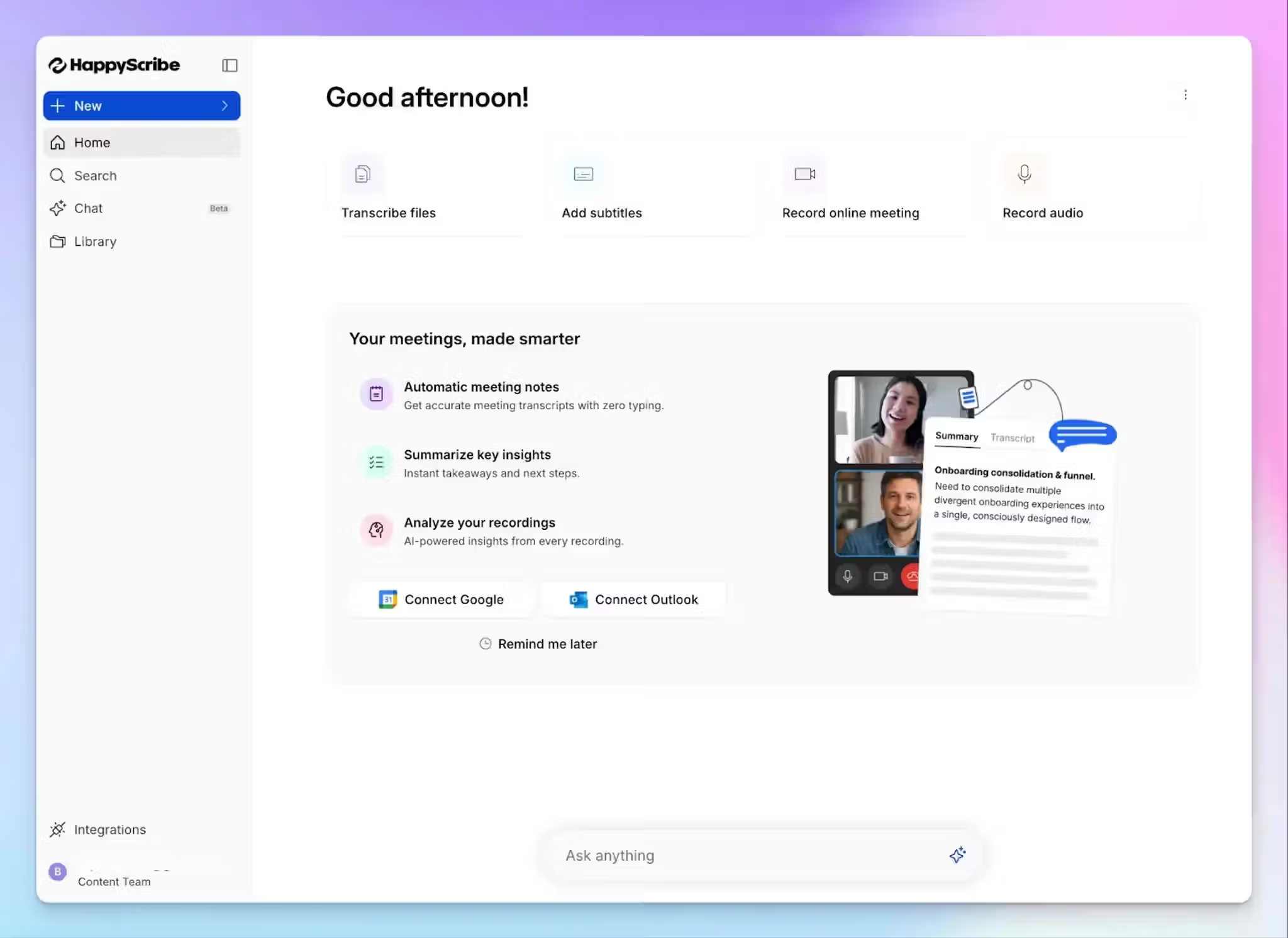
Built with privacy in mind, HappyScribe is a European transcription platform that supports this workflow. It offers AI-powered transcription in over 150 languages, plus the option to send transcripts to human proofreaders for a higher-accuracy pass. The built-in editor lets you play back audio alongside the transcript, making verification easier.
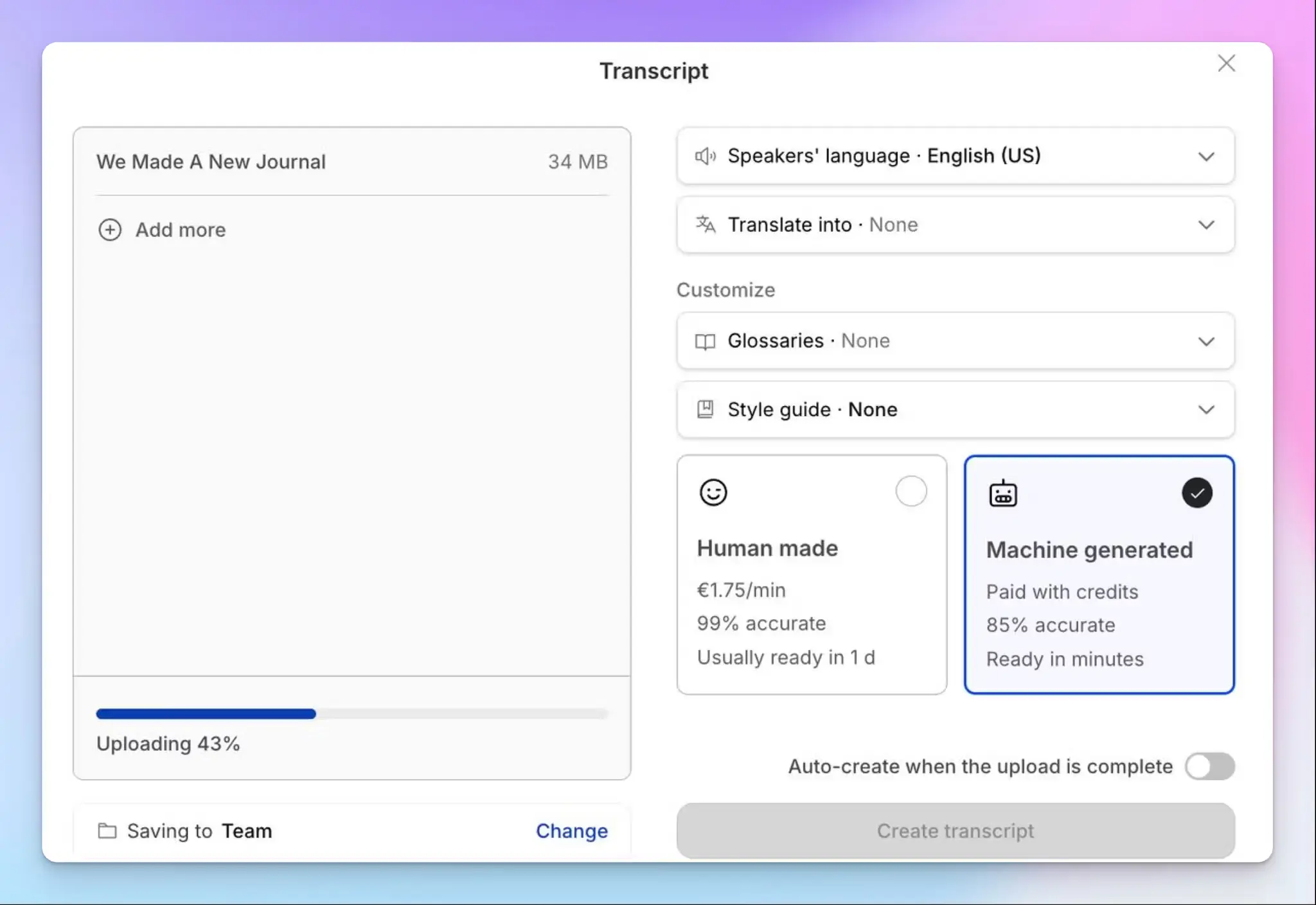
For research teams managing multiple interviews, all transcripts include speaker labels, timestamps, and export options compatible with QDA software like NVivo, ATLAS.ti, and MAXQDA.
Researchers can use HappyScribe’s AI Chat to query the entire transcription library and identify patterns or insights more quickly.
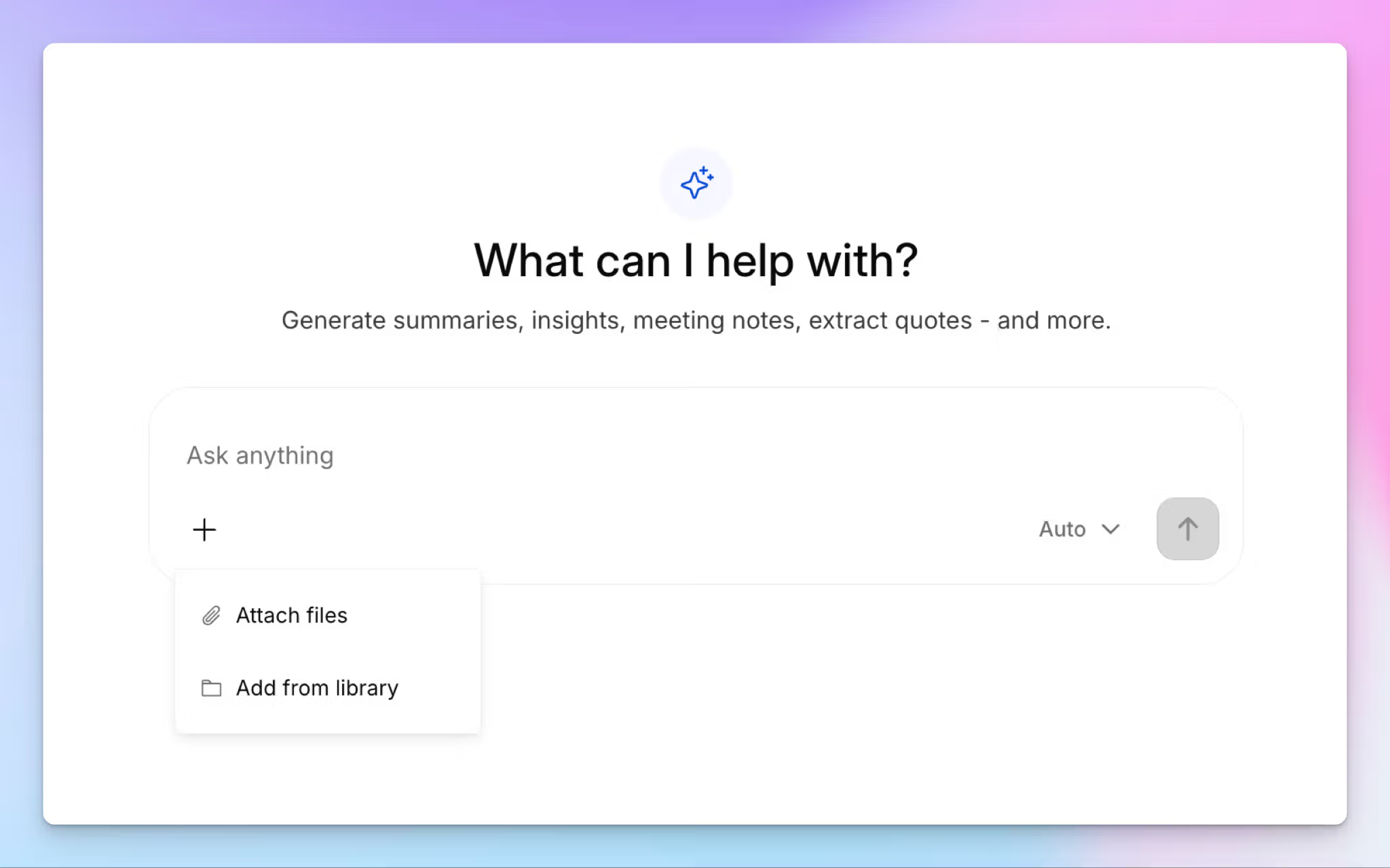
No matter which tool you use, the key principle remains the same: AI generates the draft; the researcher owns the final transcript.
How to Report Transcription in Your Methodology Section
McMullin (2023) found that transcription is routinely under-reported in published qualitative research.
Many articles say nothing more than "interviews were transcribed," with no indication of who did the transcription, what style was used, or how accuracy was ensured. This is a transparency gap that reviewers and editors are increasingly likely to flag.
At a minimum, your methodology section should include:
1. Who transcribed the data: State whether the researcher, a hired transcriber, or an AI tool (with human review) produced the transcripts. If you outsourced, note the measures taken to ensure confidentiality.
2. What transcription style was used, and why: Specify whether you used full verbatim, clean verbatim, edited, or another approach, and connect the choice to your analytical method. For example: "Interviews were transcribed in clean verbatim style, omitting filler words and false starts, to support thematic analysis."
3. How accuracy was ensured: Describe your verification process. Did you review all transcripts against the audio? Spot-check a percentage? Use a second researcher to check a subset?
4. How confidentiality was maintained: Note your anonymization procedures and data storage protocols. If AI transcription was used, state whether the tool's data processing complies with your institution's requirements.
5. Any limitations: Acknowledge factors that may have affected transcription quality: non-native accents, technical jargon, poor audio in certain interviews, or segments that remained inaudible.
Here is a sample methodology paragraph that covers these elements concisely:
"All 24 interviews were recorded with participant consent and transcribed using AI-powered speech recognition software, followed by manual review against the source audio by the lead researcher. Clean verbatim transcription was used, omitting filler words and false starts, to produce transcripts suited to thematic analysis. Identifying details were replaced with pseudonyms during the review process. Transcripts and audio files were stored on the university's encrypted server in compliance with institutional data protection policy."
A statement like this takes fewer than 80 words and addresses the five reporting criteria above. It improves the credibility of your work and shows methodological awareness.
Build transcription decisions into your research design
Transcription is one of those stages that rarely gets the attention it deserves in research design, even though the choices you make here ripple through every phase that follows.
The transcription style you choose should align with your methodology. Your verification process should be documented, not assumed. And your ethics application should address recording handling and third-party access before data collection starts.
AI-powered transcription now handles the bulk of the work for studies using thematic analysis or grounded theory.
The researcher's role shifts to reviewing the draft against the audio, correcting errors, anonymizing sensitive details, and securely storing the final transcript.
If you’re looking for a transcription platform built with research workflows in mind, HappyScribe offers AI-powered transcription in over 150 languages with speaker labels and timestamps. Human proofreading is available for studies that require a higher-accuracy pass.
FAQs on the role of transcription in qualitative research methodology
What is transcription in qualitative research?
Transcription in qualitative research is the process of converting audio or video recordings into written text for systematic analysis. It turns spoken data from research interviews, focus groups, and other data collected through qualitative methods into written records that researchers can code, tag, and analyze. The transcription process is a critical part of the qualitative research process because the resulting written transcripts become the primary data source for qualitative data analysis.
What are the different types of transcription used in qualitative studies?
There are three main types. Verbatim transcription captures the exact words spoken, including filler words, false starts, and non verbal cues. Edited transcription produces a readable transcript by removing disfluencies while preserving meaning. Jeffersonian notation is a specialized system used in conversation analysis that records overlap, pauses, and intonation. The right choice depends on your analytical method. Thematic analysis and grounded theory work well with clean verbatim. Discourse analysis requires careful listening and full verbatim to capture how something was said, not just what was said.
Should I use manual transcription or AI transcription software?
Manual transcription requires careful listening and offers deep immersion in the data, which many researchers value, but it takes 3-8 hours per hour of audio content. Transcription software like HappyScribe can produce a first draft in minutes, reducing the time and cost of transcribing qualitative data significantly. The practical workflow for most qualitative researchers now is to use AI to generate the draft and then review it against the audio recordings. For large-scale studies with dozens of research interviews, AI-assisted transcription followed by human review has become the dominant approach. You can also outsource transcription to a professional transcription service if the volume or language requirements exceed what your team can handle.
How do I choose the right transcription service for qualitative research?
Look for a service that supports your research needs. Key considerations include: whether the platform offers speaker labels and timestamps (essential for interview transcripts and focus group discussions), export compatibility with qualitative analysis tools like NVivo or ATLAS.ti for collaborative analysis, data storage policies and end to end encryption for protecting research data, and whether audio content is used to train AI models. HappyScribe, for example, supports transcription in over 150 languages, provides high quality transcripts with speaker identification, and offers both AI and human proofreading options, making it a strong fit for qualitative researchers managing multiple digital files across a study.
How does poor audio quality affect transcription accuracy?
Poor audio quality is one of the biggest sources of data loss in transcribing interviews. Background noise, overlapping speakers in focus groups, and low-quality microphones all reduce accuracy for both manual and AI transcription. The result is inaudible segments, misattributed speakers, and a transcript that may not faithfully represent the words spoken. To get high quality transcription, use a dedicated recorder, test levels before the session, and ask participants in remote interviews to use headphones. These steps help whether you transcribe audio yourself, use transcription software, or send recordings to a professional transcription service provider.
Can AI transcription help researchers identify key themes and provide valuable insights?
AI transcription converts audio or video into written format quickly, which allows researchers to move into data analysis sooner. Some platforms, including HappyScribe, also offer AI-powered tools that let you query your transcription library to surface key insights across multiple transcripts. This can help researchers working with large volumes of qualitative data spot patterns earlier.
That said, AI handles the converting audio to text step. The comprehensive analysis, interpretation of key themes, and the work of drawing valuable insights from transcribed data still belongs to the researcher.
For studies involving spoken language in specialized fields like medical research, human review remains essential to ensure the transcript captures domain-specific terminology accurately.
What are the 5 methods to analyze qualitative data?
Five common methods for qualitative analysis are thematic analysis (identifying recurring key themes across a dataset), grounded theory (building theory from transcribed data through iterative coding), content analysis (counting and categorizing concepts in qualitative data, often used by market researchers and in medical research), discourse analysis (examining how spoken language constructs meaning, requiring full verbatim transcription), and narrative analysis (studying how participants structure stories from their experiences using direct sources of personal account).

Rodoshi Das
Rodoshi is the Content Lead at HappyScribe, the privacy-first transcription and AI notetaker platform based in Barcelona. Shaping content strategies and building AI workflows excites her as much as exploring new SaaS tools. She specializes in product-led content that informs rather than sells, grounded in honest product benchmarking and low tolerance for empty marketing speak.