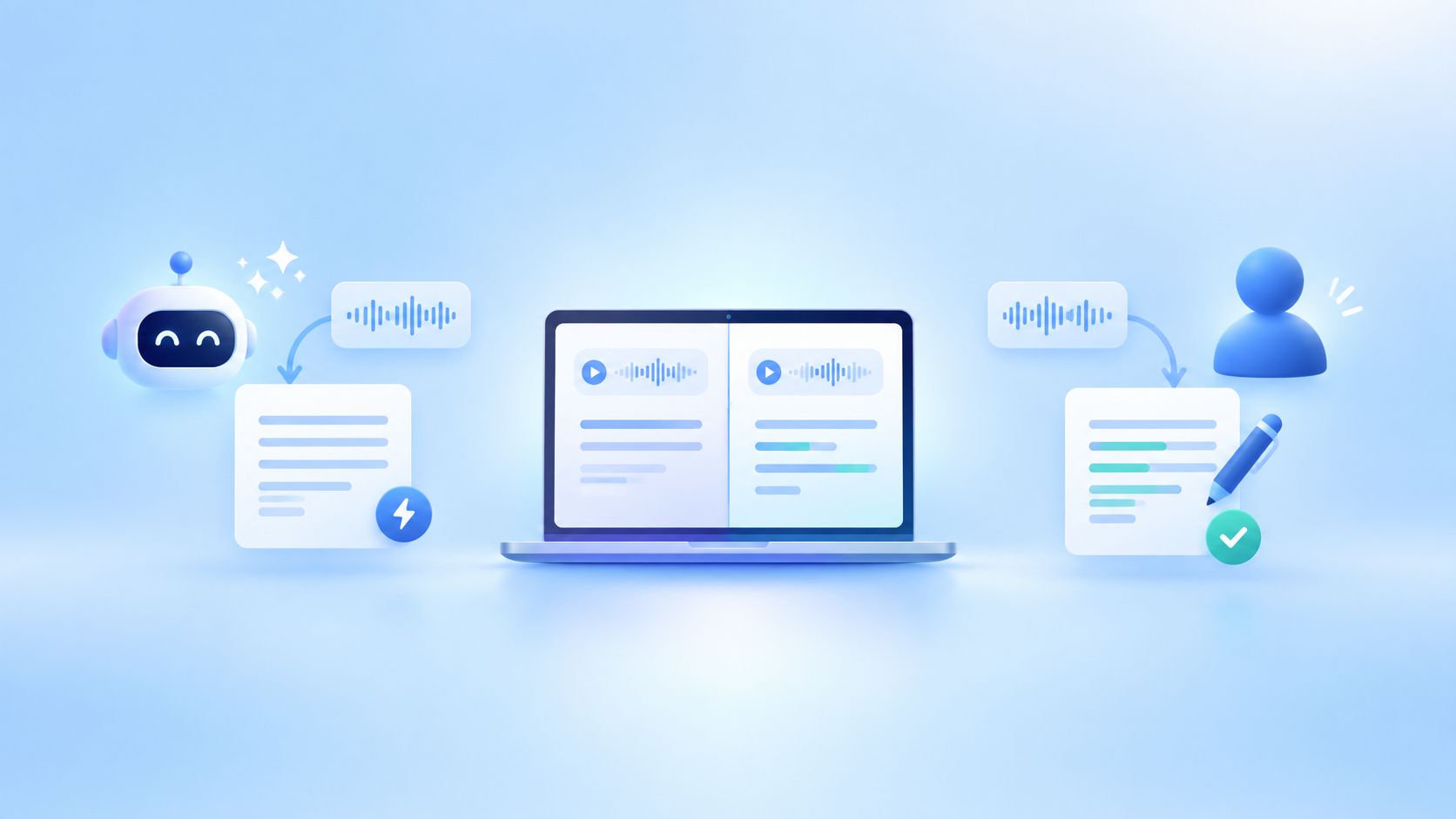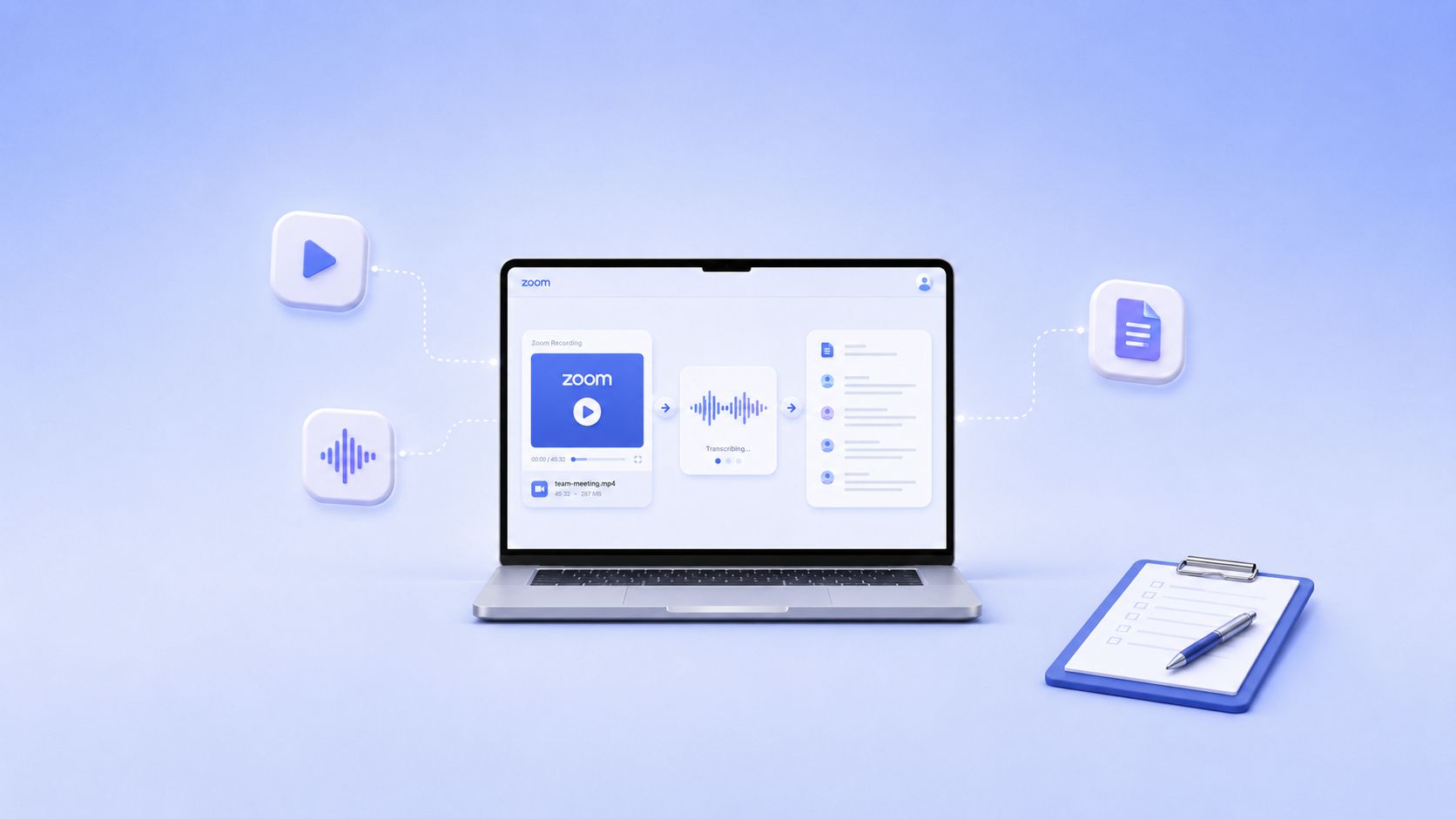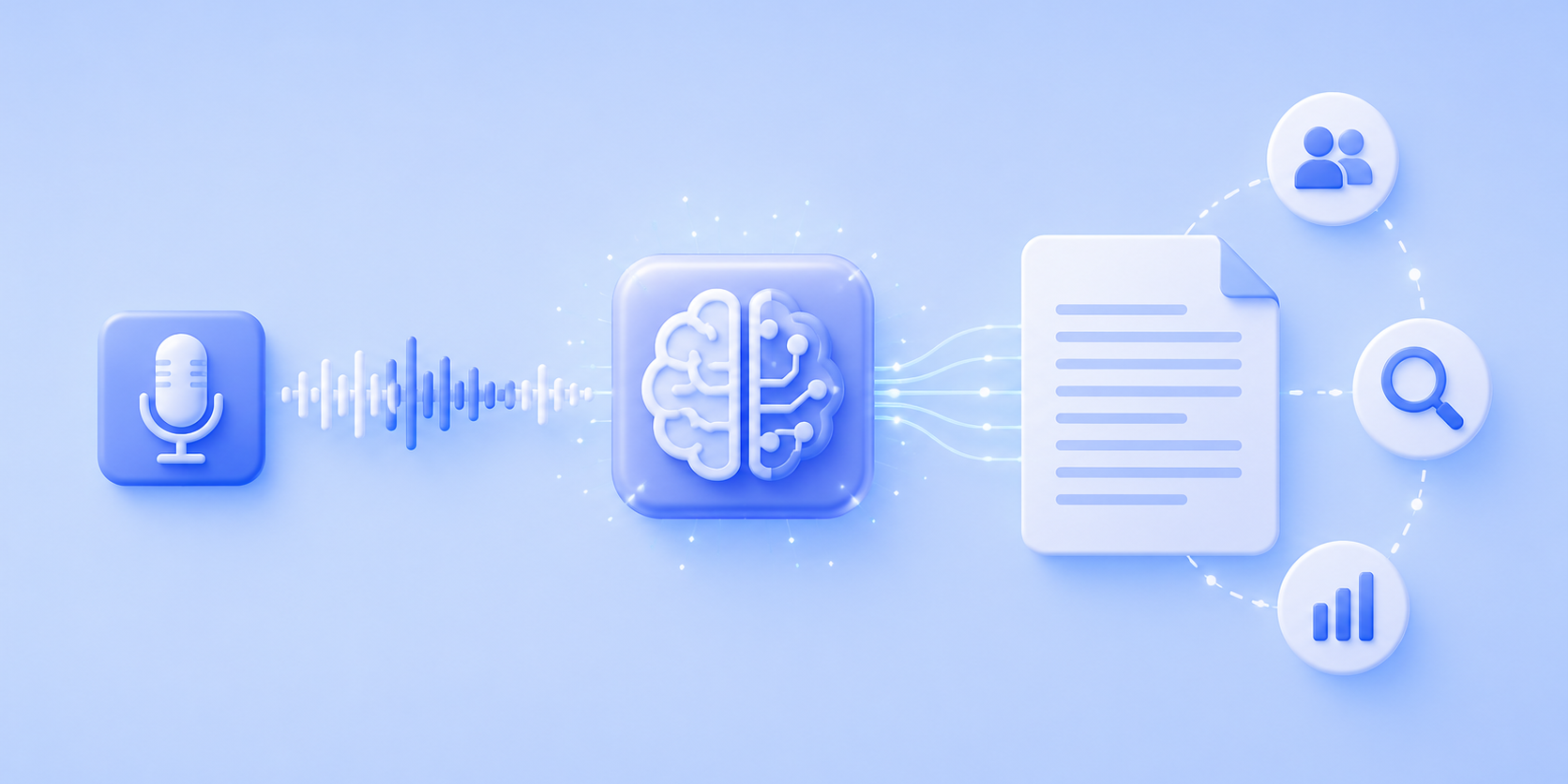
Yes, AI transcription is good enough for qualitative research when used as a first draft followed by human review. A 2026 scoping review found that 8 of 9 comparative studies supported the use of AI transcription tools for research interviews. The key is treating AI-generated transcripts as a starting point, not a finished product.
What the research says about AI transcription accuracy
If you’ve heard that AI transcription is not reliable enough for serious qualitative research, you’re not wrong.
But you’re not entirely right either.
The tools have changed faster than the reputation, and the evidence now tells a more nuanced story than "AI can't handle research-grade transcription."
The most comprehensive evidence comes from a 2026 scoping review published in the Annals of the Academy of Medicine, Singapore. Researchers Lim and Tan analyzed 9 comparative studies evaluating AI transcription tools against manual transcription in qualitative research contexts. 8 of the 9 studies supported the use of automated speech recognition in research interviews.
Accuracy was highest for English-language recordings and declined with other languages, though multilingual transcription services are improving rapidly.
Separately, researchers behind the open-source Vink tool (built on OpenAI's Whisper model) found that AI transcription significantly reduced the transcription burden while maintaining data quality sufficient for qualitative analysis. Their work shows that automatic transcription can handle the demands of health research data collection, provided researchers verify the output.
Across research projects in multiple disciplines, the pattern is consistent: AI transcription saves time without compromising the ability to identify patterns during qualitative analysis.
That said, AI transcription is not uniformly reliable. Transcription accuracy often drops during overlapping speech among multiple speakers, heavy accents or dialects, specialized terminology in medical or legal contexts, and poor audio quality due to background noise or low-quality recording equipment.
But these are not reasons to avoid AI tools entirely. They are conditions that researchers need to plan for.
The evidence supports the use of AI transcription in qualitative research. But the evidence also makes clear that human review is not optional.
📚 Also read:
Where AI transcription works well and where it falls short
Let’s look at some common recording scenarios and what you can expect from AI.
| AUDIO CONDITION | AI PERFORMANCE | WHAT TO EXPECT |
|---|---|---|
| Clear single speaker, high quality audio | High (95%+) | Minimal corrections needed during review |
| Two speakers with clear turn-taking | High | Speaker diarization generally reliable |
| Multiple speakers with overlapping speech | Lower | Speaker labels may be wrong; careful review required |
| Heavy accents or dialect | Variable | Accuracy drops on key passages; review essential |
| Technical terminology (medical, legal, academic) | Variable | AI may substitute unfamiliar words; build a domain-specific review checklist |
| Background noise or poor recording quality | Low | Consider professional transcription by a human transcriber instead |
The takeaway: Test your chosen transcription tools on a sample of your source audio before committing to a full project. A five-minute test clip will reveal whether the tool handles your specific conditions.
If the errors are minor and predictable, AI transcription with human oversight will work. If the AI struggles with fundamental elements of the recording, professional human transcription is the safer choice.
The hybrid workflow: AI draft, human review
The real question for academic researchers in 2026 is not "AI or human?" but "how do I integrate AI transcription into a defensible research process?" The hybrid workflow below provides a structured approach that you can describe in your methodology section.
Step 1: Record with quality in mind
Use a good microphone and minimize background noise. If you’re conducting focus groups, ask speakers to avoid talking over each other. Audio quality is the single biggest factor in transcription accuracy.
Step 2: Run AI transcription
Upload your audio file to your chosen transcription software. Most AI transcription tools deliver results in minutes, even for hour-long qualitative interviews.
Step 3: Review against the source audio
Play back the recording while reading the transcript. Correct errors, fix speaker labels, and flag sections where the automated transcription struggled. This human review process is what separates a usable research transcript from a rough draft.
Step 4: De-identify the transcript
Replace participant names with pseudonyms and strip identifying details. This step is separate from the transcription process and should never be skipped, regardless of which method you use.
Step 5: Export to your qualitative analysis software
Save in a format compatible with your preferred tool (NVivo, ATLAS.ti, MAXQDA). Most transcription tools export to TXT, DOCX, or PDF.
HappyScribe fits naturally into this workflow. It offers AI transcription in 150+ languages delivered in minutes with over 95% accuracy. The interactive editor syncs audio playback to the transcript for efficient review.
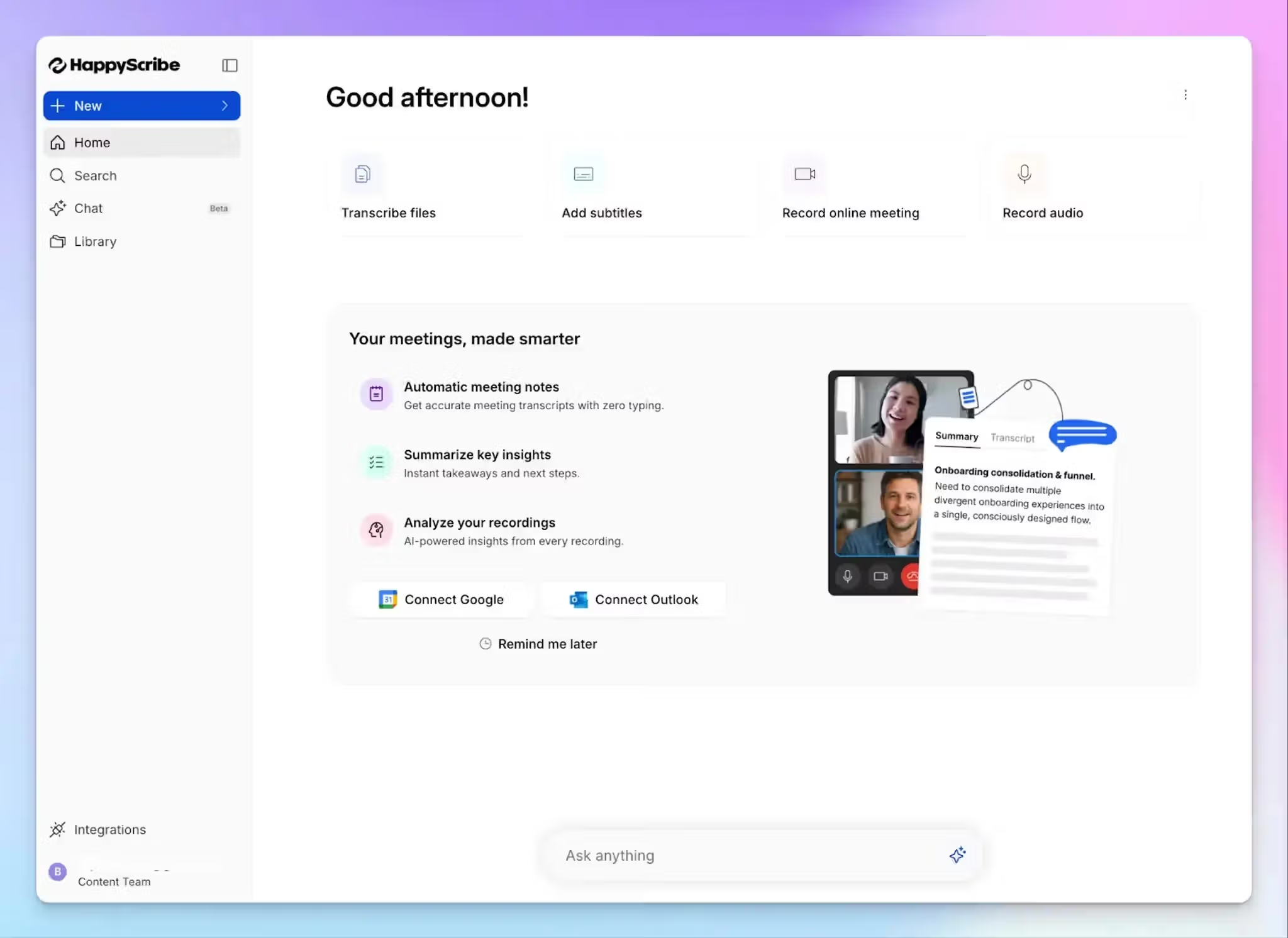
When transcription quality is critical, researchers can send the AI draft for human proofreading with 99% accuracy and a 24-hour turnaround.
For research teams, HappyScribe’s AI Chat makes it easy to query across multiple transcriptions at once and identify patterns.
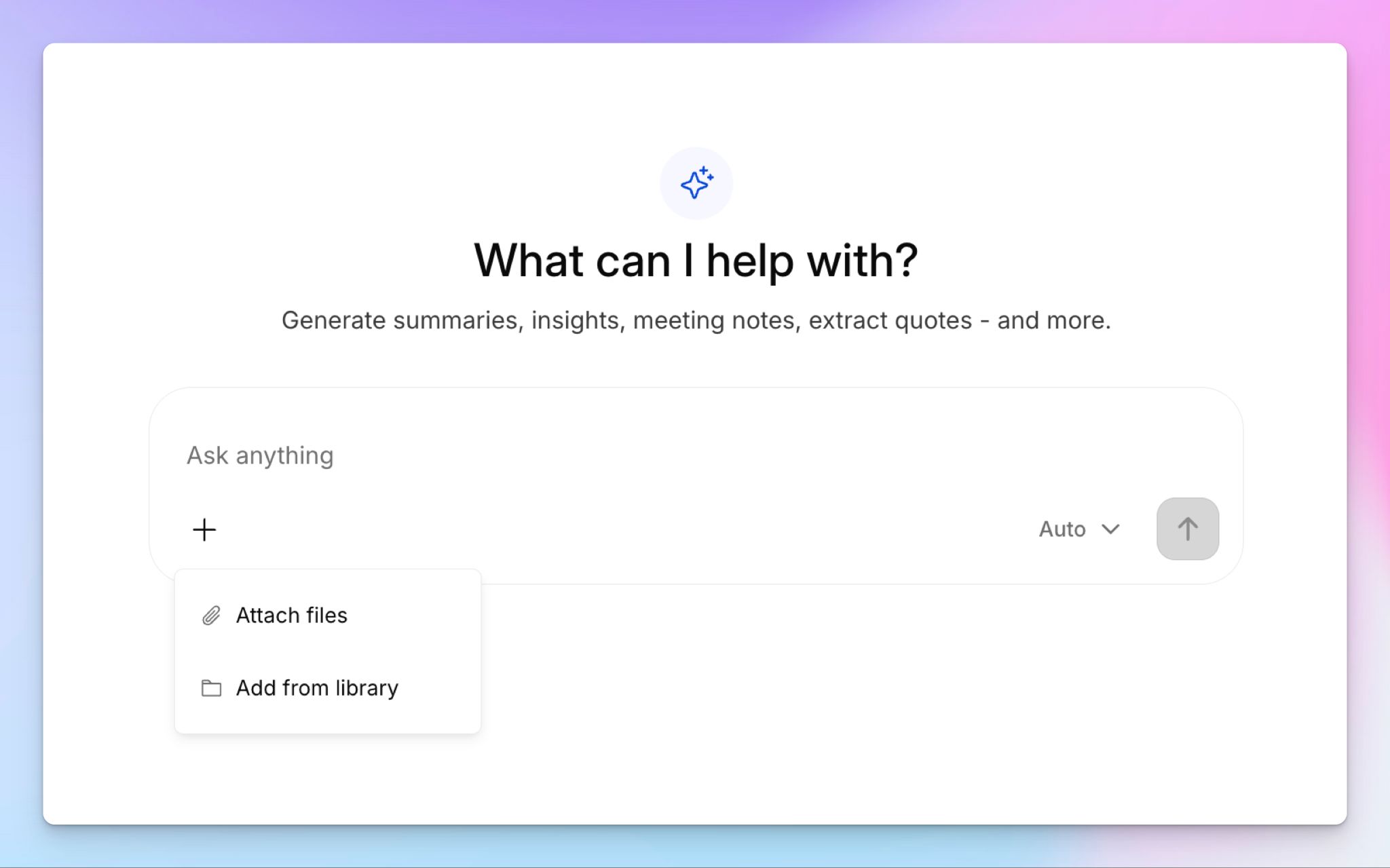
HappyScribe also offers multiple export formats so you can quickly ship the transcripts into your choice of research analysis software.
Ethics and informed consent for AI transcription
Using AI transcription introduces ethical considerations that academic institutions are increasingly scrutinizing.
If your research involves qualitative data from interviews or focus groups, you need to address these before your data collection begins.
A 2025 editorial by Samuel and Wassenaar in the Journal of Empirical Research on Human Research Ethics argued that AI transcription requires explicit informed consent from participants.
Generic language about "professional transcription" in consent forms is no longer sufficient at many academic institutions. Participants should know that their recordings will be processed by AI, that their participant data may be uploaded to cloud-based servers, and how long those recordings will be retained.
Data privacy is the central concern. When you upload an audio file to a cloud-based transcription service, sensitive information leaves your institutional infrastructure.
Your IRB or ethics board will want to know where the data is processed, whether the service is GDPR-compliant, and whether the provider retains or trains on uploaded recordings.
Failing to address these questions can create legal risks for your institution.
Researchers working with sensitive topics or vulnerable populations should pay particular attention and may find that human expertise in transcription for qualitative work is worth the additional cost and resources.
In your methodology section, disclose the AI tool used, describe the human review process you followed, and note any limitations you observed in the AI-generated transcripts.
This level of transparency is becoming standard practice in academic research. HappyScribe is GDPR-compliant and offers enterprise-grade security and stores all data in an ISO 27001-certified EU data center, which simplifies the IRB documentation.
Wrapping up: Deciding between AI, human, or hybrid transcription
Your choice of transcription method should match your research project's specific needs. Here is a quick decision framework.
| YOUR SITUATION | RECOMMENDED APPROACH |
|---|---|
| Clear audio, standard language, budget-conscious | AI transcription with researcher review |
| Large dataset (20+ interviews), tight timeline | AI transcription with human proofreading (hybrid) |
| Complex audio (multiple speakers, heavy accents, noise) | Professional transcription by trained professionals |
| Sensitive topic, vulnerable participants | Human transcription with strict confidentiality controls |
| Multilingual interviews | AI transcription in supported languages, with native-speaker review |
For example, a research project with 20 clear-audio interviews will benefit enormously from AI speed, while a study relying on nuanced meaning in heavily accented speech may still need a human transcriber.
What matters is choosing the right combination of speed, accuracy, and ethical safeguards for your specific situation, and being transparent about that choice in your methodology.
If you want the speed of AI transcription without giving up on research-grade review workflows, HappyScribe is a strong place to start. You can generate transcripts in minutes, get support for 150+ languages, review transcripts alongside synced audio, and add human proofreading when accuracy requirements are higher.
FAQs
Can researchers use AI transcription for large qualitative studies?
Yes. AI transcription is particularly useful for projects with dozens of interviews because it reduces the time spent on manual transcription. Many research teams use AI-generated drafts first, then review transcripts manually before coding or thematic analysis begins.
What affects AI transcription accuracy the most?
Audio quality has the biggest impact on transcript accuracy. Background noise, overlapping speakers, unclear pronunciation, and technical jargon all increase the likelihood of transcription errors. AI transcription systems perform better when interviews are recorded with a good microphone in a quiet environment.
Is AI transcription safe for confidential interviews?
It can be, provided researchers choose platforms with strong privacy safeguards and clear data policies. Before uploading recordings, researchers should confirm where data is stored, whether files are retained after processing, and how participant information is protected. Europe-based HappyScribe offers GDPR-compliant transcription workflows designed for privacy-conscious teams, and ensures no data leaves the boundaries of the EU.
Why do researchers still review AI-generated transcripts manually?
Qualitative research depends heavily on nuance and context. A missed word or incorrect speaker label can affect interpretation during analysis. Manual review helps researchers catch subtle errors before transcripts are imported into tools like NVivo or MAXQDA.
Can AI transcription tools support multilingual research projects?
Yes. Many transcription platforms now support multilingual interviews and cross-language workflows. HappyScribe supports transcription in 150+ languages and includes export options compatible with common qualitative analysis software.
Does HappyScribe have a mobile app?
Yes. HappyScribe offers a free mobile app for iOS and Android that turns your phone into a recorder linked to your workspace. Recordings sync to your library automatically, even if the app is closed or your signal drops mid-upload. Once the file lands in your library, you can transcribe it in 150+ languages, add human proofreading, or search across it with AI Chat. The app is available on every plan, including free accounts.

Rodoshi Das
Rodoshi is the Content Lead at HappyScribe, the privacy-first transcription and AI notetaker platform based in Barcelona. Shaping content strategies and building AI workflows excites her as much as exploring new SaaS tools. She specializes in product-led content that informs rather than sells, grounded in honest product benchmarking and low tolerance for empty marketing speak.